
Osteoarthritis Embolization GAE Treatment
- No hospital
- No surgery
- No sutures
- No scars
- Outpatient
- Image guided
- Fast recovery
- Targetted therapy
- Low risk
- Successful
- Proven benefit
- Quick
Setup an appointment
Geniculate Artery Embolization for Osteoarthritis
You have likely been told surgery or medication are the only options for osteoarthritis. However, recent research and advancement has found that a non-surgical treatment option called geniculate artery embolization can offer a highly effective and long-lasting relief from chronic joint disease.
Osteoarthritis
Osteoarthritis (OA) refers to the inflammation of joints (arthritis) along with wear and tear of the overlying cartilage. Cartilage, a type of connective tissue, provides a cushion in the joint allowing for frictionless movement. OA affects around 32.5 million adults in the United States every year. In most people, it presents as a chronic medical condition involving the joints in the knee, hands, elbow, and spine.1,2
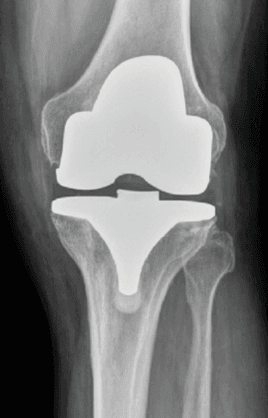
Causes of Osteoarthritis
Osteoarthritis is caused by the loss of the protective cartilage of the joint. When the cartilage is gone, bone will rub on bone. Certain risk factors are associated with an increased incidence of osteoarthritis. These factors include:
- Joint overuse – overusing joint e.g., running a lot without proper rest can stratify the risk
- Older age
- Gender – women are more likely to develop osteoarthritis, especially after 50. This is partly due to a post-menopausal decrease in estrogen levels.
- Being overweight – extra weight puts your joint under excessive stress and increases the wear and tear of the joint.
- Family history – having an immediate family member with OA also amplifies the risk of you having OA
- Race – certain Asian populations have a lower risk of developing osteoarthritis.2
Should Osteoarthritis be Treated?
Osteoarthritis Treatment Options
Osteoarthritis, unfortunately, does not have a permanent cure. The first strategy is to avoid the risk factors precipitating OA. Secondly, the treatment regimens for osteoarthritis include symptomatic treatment combined with various therapies to decrease the progression of osteoarthritis. Treatment options include:2,4
- Physical therapy
- Ice packs for swelling
- Heating pad for reduction of pain
- NSAIDs like ibuprofen for reducing pain
Persistent and painful osteoarthritis along with movement disabilities warrants surgical repair. Some surgical options for OA include: 4
- Arthroscopy
- Cartilage repair
- Osteotomy
- Arthroplasty
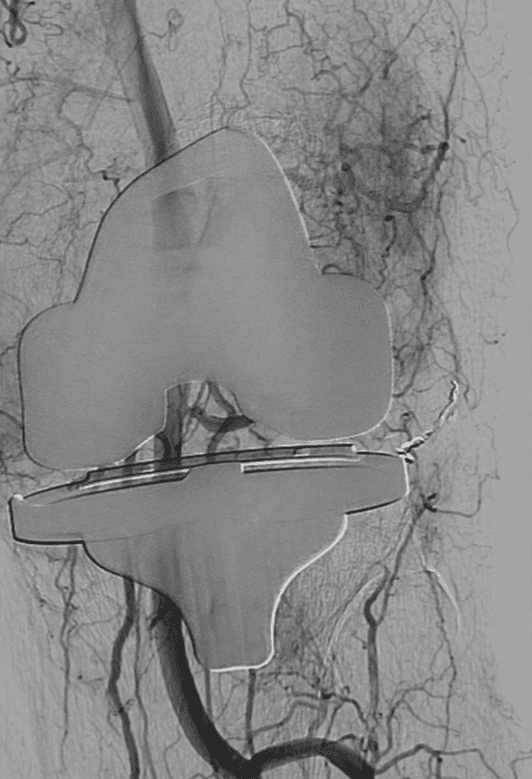
You have likely been told only the above are your options for osteoarthritis. However, recent research and advancement has found that a non-surgical treatment option called genicular artery embolization can offer a highly effective and long-lasting relief from chronic joint disease.5
Non-Surgical Geniculate Artery Embolization for Osteoarthritis
Surgery is often reserved for advanced cases or may not be ideal for every patient due to the length of recovery and surgical risks. Non-surgical embolization could be a potential treatment option is such a scenario.
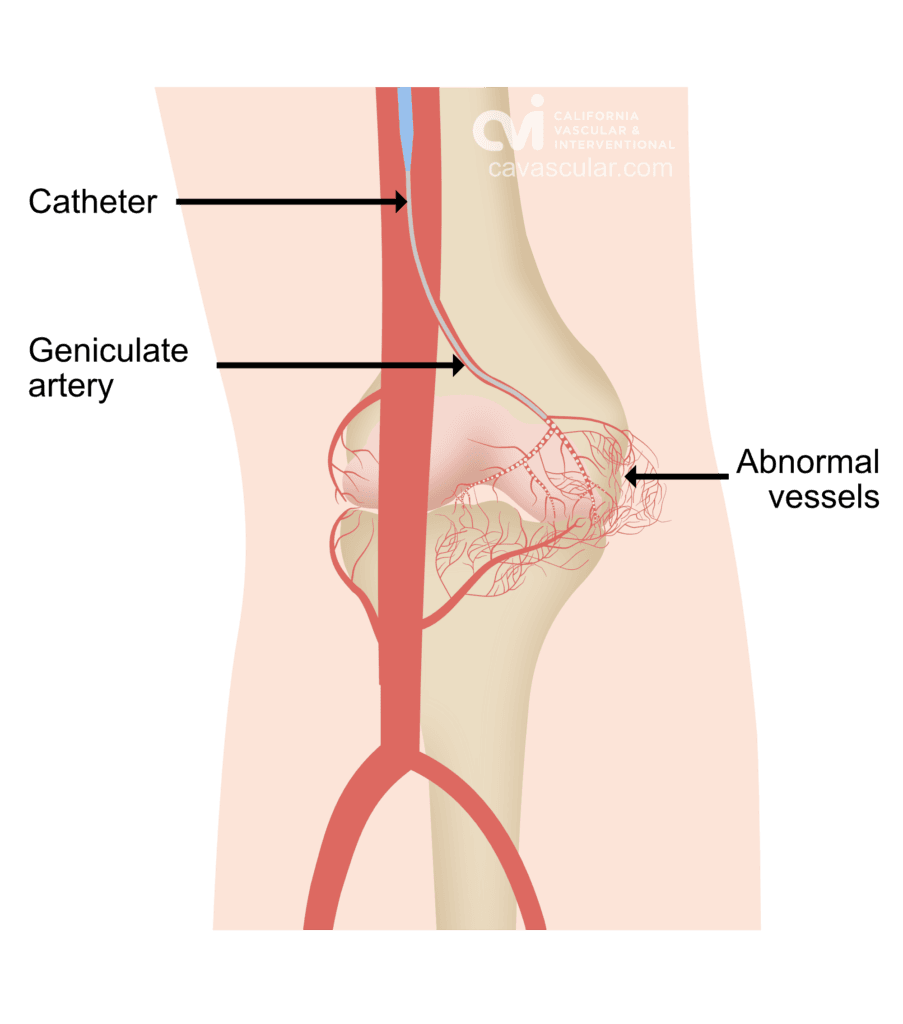
Embolization has been around for decades and has successfully been used as a treatment option for many ailments including cancer, life threatening bleeding, big prostates, fibroids, and other vascular abnormalities. Genicular artery embolization (GAE) is a minimally invasive, novel approach that applies the same technique for the treatment of osteoarthritis. As the name suggests, GAE works by embolizing (or blocking) small arteries thus reducing the blood flow to the inflamed joint. Much of the pain experienced in osteoarthritis comes from abnormal blood vessels that form in the lining of the joint. Reducing blood flow helps reduce inflammation and subsequently diminishes the pain caused by inflammation.6
The procedure was originally designed for the symptomatic treatment of hemarthrosis; a condition characterized by bleeding into the joint after knee surgery. Currently, GAE is not a standardized treatment option for OA but an increasing number of studies are indicating the usefulness of this procedure.
Clinical studies have shown that there is a significant decrease in pain and osteoarthritis post GAE. Moreover, the need for analgesics (painkillers) was decreased. The studies also reported no serious side effects or complications during or after the procedure.7
You should seek the expert advice of your orthopedic surgeon and an interventional radiologist to further understand your options and expected outcomes.
Our outpatient center sees patients throughout Southern California including Los Angeles, Orange County and San Diego. The fibroid treatment is performed by our Endovascular Physician (an Interventional Radiologist) who is board certified in image-guided procedures using X-rays, tiny catheters and other micro-tools, and has performed thousands of complex embolizations.
What is Interventional Radiology? This is the only specialty in medicine specifically trained to perform embolization procedures, such as for hemarthrosis. Read more here.
GAE - What to Expect
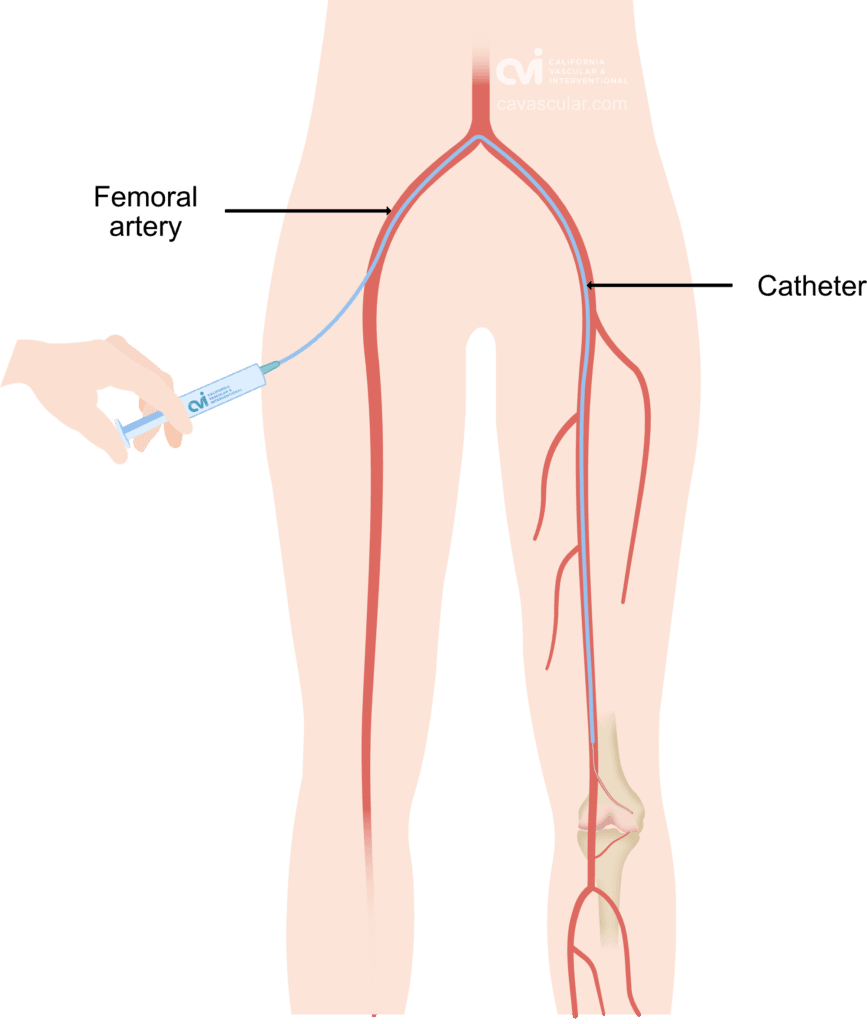
Geniculate artery embolization is an outpatient non-surgical procedure with minimal downtime. The procedure is done in an outpatient state of the art center where our interventional radiologist performs the treatment through a tiny tube called a catheter. This procedure can be performed by placing the catheter in an artery at the top of the leg (called a femoral approach).
The patient is given a local and topical anesthetic to numb the skin and a mild sedative, so that the procedure is not painful. A sophisticated X-ray machine that creates moving pictures in “real” time enables the doctor to see the catheter as it is guided through the blood vessels and into the geniculate artery.
The final step in geniculate artery embolization is the injection of tiny particles the size of sand particles through the catheter. The particles lodge in the blood vessels bleeding into the joint and cut off their blood supply. By blocking or reducing the blood flow to the affected joint, this results in reduction in the inflammation and swelling.8,9
Patients are discharged 1-2 hours after the procedure and pain relief usually occurs after two weeks. As the procedure is minimally invasive, the incidence of any complications is very low. Patients might experience bruising or pain at the injection site. Some rare complications for GAE include allergic reactions, infection, bleeding/bruising, skin irritation.10
Results of Osteoarthritis GAE
Current data shows promising results in relieving osteoarthritis. A 12-month-long study showed that there was a decrease of 61% and 67% in WOMAC and pain (assessed by VAS) scores, respectively.5
Why choose CVI?
Our center specializes in embolizations, and our staff is uniquely trained to care for these types of procedures, from the pre-op to the post-op period. Our specialist performs a high number of embolization for not only the knee but also in other more high risk and complex organs, such as the kidney, liver, lung, uterus, prostate and others. Patients are often surprised how quick and simple the procedure was for them, but this comes at the experience of our specialist who performs a variety of complex embolizations safely. This diversity of experience has resulted in our specialist to treat complex cases safely and effectively.
Our specialist continually keeps up with the research to make sure that he brings the best and newest technology and technique to our center. We are also always collecting feedback from patients and modifying how we provide care so that patients have the best level of experience.
What do you need to do next? Request an appointment to meet with our embolization doctor who will review your imaging, labs and history to determine if you are candidate for the procedure, and the outcomes you can expect.
Appointments are available via an online video telehealth platform or in person at one of the offices in Los Angeles, Orange County or San Diego, depending on the doctor’s availability. Contact Us Today. Why should you choose us? Read here.
References:
- Osteoarthritis – Symptoms and causes – Mayo Clinic. Accessed March 2, 2022. https://www.mayoclinic.org/diseases-conditions/osteoarthritis/symptoms-causes/syc-20351925
- Osteoarthritis (OA) | Arthritis | CDC. Accessed March 2, 2022. https://www.cdc.gov/arthritis/basics/osteoarthritis.htm
- Rönn K, Reischl N, Gautier E, Jacobi M. Current surgical treatment of knee osteoarthritis. Arthritis. 2011;2011:1-9. doi:10.1155/2011/454873
- Padia SA, Genshaft S, Blumstein G, et al. Genicular Artery Embolization for the Treatment of Symptomatic Knee Osteoarthritis. JB & JS open access. 2021;6(4). doi:10.2106/JBJS.OA.21.00085
- Padia SA, Genshaft S, Blumstein G, et al. Genicular Artery Embolization for the Treatment of Symptomatic Knee Osteoarthritis. JB & JS open access. 2021;6(4). doi:10.2106/JBJS.OA.21.00085
- Heller DB, Beggin AE, Lam AH, Kohi MP, Heller MB. Geniculate Artery Embolization: Role in Knee Hemarthrosis and Osteoarthritis. Radiographics. 2022;42(1):289-301. doi:10.1148/RG.210159/ASSET/IMAGES/LARGE/RG.210159.VA.JPEG
- Torkian P, Golzarian J, Chalian M, et al. Osteoarthritis-Related Knee Pain Treated With Genicular Artery Embolization: A Systematic Review and Meta-analysis. Orthopaedic journal of sports medicine. 2021;9(7):23259671211021356. doi:10.1177/23259671211021356
- van Zadelhoff TA, Moelker A, Bierma-Zeinstra SMA, Bos PK, Krestin GP, Oei EHG. Genicular artery embolization as a novel treatment for mild to moderate knee osteoarthritis: protocol design of a randomized sham-controlled clinical trial. Trials. 2022;23(1):1-8. doi:10.1186/S13063-021-05942-X/TABLES/1
- Society of Interventional Radiology – SIR 2021 knee pain. Accessed March 2, 2022. https://www.sirweb.org/media-and-pubs/media/news-release-archive/sir-2021-knee-pain-031621/
- Geniculate Artery Embolization for the Treatment of Knee Pain Secondary to Osteoarthritis NCT number NCT02850068. Published online 2017.
The above information explains what is involved and the possible risks. It is not meant to be a substitute for informed discussion between you and your doctor, but can act as a starting point for such a discussion.


Knee pain doesn't have to mean surgery.
Knee GAE at a glance
Image-guided embolization of the knee’s abnormal vessels — home the same day.
When pain relief usually begins
Outpatient — discharged and home the same day
Everything surgery isn't
- No hospital
- Outpatient
- Low risk
- No surgery
- Image guided
- Successful
- No sutures
- Fast recovery
- Proven benefit
- No scars
- Targeted therapy
- Quick
Genicular artery embolization (GAE) is a minimally invasive, non-surgical treatment for knee osteoarthritis. Much of OA pain comes from abnormal blood vessels that form in the joint lining — through a single tiny catheter in the leg, guided by real-time X-ray, Dr. Allaei injects particles the size of grains of sand to block those vessels, reducing inflammation and pain.6,8,9 It’s outpatient, you’re home in 1–2 hours with no scars, and pain relief usually begins around two weeks. A 12-month study reported roughly 61% and 67% reductions in stiffness/function and pain scores.5
Single tiny catheter, no incisions
Outpatient, home same day
When relief usually begins
Geniculate artery embolization for osteoarthritis
You've likely been told surgery or medication are the only options — but research has found a non-surgical treatment that can offer highly effective, long-lasting relief from chronic joint disease.5
What is osteoarthritis?
Osteoarthritis is inflammation of the joints with wear and tear of the cartilage — affecting around 32.5 million U.S. adults each year.1,2
What causes osteoarthritis?
OA develops when the protective cartilage is lost and bone rubs on bone — with several factors raising the risk.2
Osteoarthritis is caused by the loss of the protective cartilage of the joint. When the cartilage is gone, bone will rub on bone. Certain risk factors are associated with an increased incidence of osteoarthritis. These factors include:
- Joint overuse — overusing a joint, e.g., running a lot without proper rest, can raise the risk
- Older age
- Gender — women are more likely to develop OA, especially after 50, partly due to a post-menopausal decrease in estrogen levels
- Being overweight — extra weight puts the joint under excessive stress and increases wear and tear
- Family history — an immediate family member with OA amplifies your risk
- Race — certain Asian populations have a lower risk of developing osteoarthritis2
Should OA be treated? Osteoarthritis is a chronic, often painful condition with swelling, joint stiffness, and decreased range of motion. Untreated or undertreated OA leads to severe worsening joint pain and immobility.3
What are the treatment options for osteoarthritis?
OA has no permanent cure — care combines symptom relief with slowing progression, and advanced cases have traditionally meant surgery.2,4 GAE offers a non-surgical path.
Osteoarthritis, unfortunately, does not have a permanent cure. The first strategy is to avoid the risk factors precipitating OA. Secondly, the treatment regimens for osteoarthritis include symptomatic treatment combined with various therapies to decrease the progression of osteoarthritis. Treatment options include:2,4
Conservative & GAE
- Physical therapy
- Ice packs for swelling
- Heating pad to reduce pain
- NSAIDs like ibuprofen for pain
- Genicular artery embolization (GAE) — targets the abnormal vessels driving the pain
Knee Surgery
- Arthroscopy
- Cartilage repair
- Osteotomy
- Arthroplasty (joint replacement)
- Reserved for advanced cases — longer recovery and surgical risks4
Persistent and painful osteoarthritis along with movement disabilities warrants surgical repair. Some surgical options for OA include arthroscopy, cartilage repair, osteotomy, and arthroplasty.4 Surgery is often reserved for advanced cases or may not be ideal for every patient due to the length of recovery and surgical risks. Non-surgical embolization could be a potential treatment option in such a scenario.
What is genicular artery embolization (GAE)?
GAE blocks the abnormal blood vessels that form in the joint lining — reducing blood flow, inflammation, and the pain it causes.6
Embolization has been around for decades and has successfully been used as a treatment option for many ailments including cancer, life threatening bleeding, big prostates, fibroids, and other vascular abnormalities. Genicular artery embolization (GAE) is a minimally invasive, novel approach that applies the same technique for the treatment of osteoarthritis. As the name suggests, GAE works by embolizing (or blocking) small arteries thus reducing the blood flow to the inflamed joint. Much of the pain experienced in osteoarthritis comes from abnormal blood vessels that form in the lining of the joint. Reducing blood flow helps reduce inflammation and subsequently diminishes the pain caused by inflammation.6
The procedure was originally designed for the symptomatic treatment of hemarthrosis — a condition characterized by bleeding into the joint after knee surgery. Currently, GAE is not a standardized treatment option for OA, but an increasing number of studies are indicating the usefulness of this procedure.
Clinical studies have shown that there is a significant decrease in pain and osteoarthritis post GAE. Moreover, the need for analgesics (painkillers) was decreased. The studies also reported no serious side effects or complications during or after the procedure.7
A team decision. You should seek the expert advice of your orthopedic surgeon and an interventional radiologist to further understand your options and expected outcomes.
What to expect — how GAE is performed
A single tiny catheter in the leg, real-time X-ray guidance, and sand-sized particles to block the abnormal vessels8,9 — outpatient, home in 1–2 hours.
Geniculate artery embolization is an outpatient non-surgical procedure with minimal downtime. The procedure is done in an outpatient state of the art center where our interventional radiologist performs the treatment through a tiny tube called a catheter. This procedure can be performed by placing the catheter in an artery at the top of the leg (called a femoral approach).
Numbing & mild sedation
A local and topical anesthetic numbs the skin and a mild sedative is given, so the procedure is not painful.
Tiny catheter, femoral approach
The catheter is placed in an artery at the top of the leg — no incisions.
Real-time image guidance
Embolize & go home
The patient is given a local and topical anesthetic to numb the skin and a mild sedative, so that the procedure is not painful. A sophisticated X-ray machine that creates moving pictures in “real” time enables the doctor to see the catheter as it is guided through the blood vessels and into the geniculate artery.
The final step in geniculate artery embolization is the injection of tiny particles the size of sand particles through the catheter. The particles lodge in the blood vessels bleeding into the joint and cut off their blood supply. By blocking or reducing the blood flow to the affected joint, this results in reduction in the inflammation and swelling.8,9
Patients are discharged 1-2 hours after the procedure and pain relief usually occurs after two weeks. As the procedure is minimally invasive, the incidence of any complications is very low. Patients might experience bruising or pain at the injection site. Some rare complications for GAE include allergic reactions, infection, bleeding/bruising, skin irritation.10
What are the results of GAE for osteoarthritis?
Current data is promising — a 12-month study showed roughly 61% and 67% decreases in WOMAC and pain (VAS) scores.5
61%
Decrease in WOMAC score (stiffness & function) at 12 months5
67%
Decrease in pain, assessed by VAS, at 12 months5
A center built for embolization — and the hands that do it
Our center specializes in embolization, and our staff is uniquely trained to care for these procedures from pre-op to post-op — but the difference patients feel most is who holds the wire.
Our center specializes in embolizations, and our staff is uniquely trained to care for these types of procedures, from the pre-op to the post-op period. Our specialist performs a high number of embolization for not only the knee but also in other more high risk and complex organs, such as the kidney, liver, lung, uterus, prostate and others. Patients are often surprised how quick and simple the procedure was for them, but this comes from the experience of our specialist who performs a variety of complex embolizations safely.
It matters who holds the wire
Exceptional catheter-and-wire skill
Reaching the small genicular arteries and embolizing only the abnormal vessels takes a steadiness of hand that’s part training, part innate talent.
Thousands of complex embolizations
Knee, kidney, liver, lung, uterus, prostate and more — a breadth of high-stakes embolization experience that makes the routine feel effortless.
Board-certified in image guidance
An interventional radiologist board-certified in image-guided procedures using X-rays, tiny catheters, and micro-tools — the specialty built for embolization.
A no-pressure consultation
Telehealth or in person — your imaging, labs, and history reviewed to determine if you’re a candidate and the outcomes you can expect.
This diversity of experience has enabled our specialist to treat complex cases safely and effectively. Our specialist continually keeps up with the research to make sure that he brings the best and newest technology and technique to our center. We are also always collecting feedback from patients and modifying how we provide care so that patients have the best level of experience. Appointments are available via an online video telehealth platform or in person at one of the offices in Los Angeles, Orange County or San Diego, depending on the doctor’s availability. Contact Us Today. Why should you choose us? Read here.
Who performs your genicular artery embolization?
At California Vascular & Interventional, your GAE is performed by Dr. Atabak Allaei — by the physician, start to finish, in a state-of-the-art outpatient center. He is one of the most experienced and trusted embolization specialists, and joint embolization is a core focus of his practice.
It matters who holds the wire. Embolizing a knee means steering a hair-thin catheter into the small genicular arteries — reading a flat, 2D X-ray while navigating a 3D vascular tree, and releasing sand-sized particles into only the abnormal vessels while sparing the healthy ones. That level of catheter-and-wire skill is part rigorous training and part innate talent — a steadiness of hand and an ability to visualize the end result that can’t simply be taught. It’s the same precision Dr. Allaei brings from thousands of complex embolizations in the body’s highest-stakes organs — the kidney, liver, lung, uterus, and prostate.
Atabak Allaei, MD
Board-certified in image-guided procedures using X-rays, tiny catheters, and micro-tools, Dr. Allaei has performed thousands of complex embolizations — the knee (GAE) alongside the kidney, liver, lung, uterus, and prostate. That breadth of catheter-and-wire experience is what lets a genicular embolization feel quick and simple for the patient. All procedures are physician-performed. Consultations by telehealth or in person in Los Angeles, Orange County, and San Diego.
Knee GAE: common questions
What is osteoarthritis?
What causes osteoarthritis, and who is at risk?
What are the treatment options for osteoarthritis?
What is genicular artery embolization (GAE)?
How is genicular artery embolization performed?
How effective is GAE for knee osteoarthritis?
Clinical studies show a significant decrease in pain and osteoarthritis symptoms after GAE, along with a reduced need for painkillers, and no serious side effects or complications reported during or after the procedure. A 12-month study showed decreases of about 61% in WOMAC scores and 67% in pain (assessed by VAS). Pain relief usually begins around two weeks after the procedure.
What is recovery like after GAE?
GAE has minimal downtime. Patients are discharged 1–2 hours after the procedure and pain relief usually occurs after about two weeks. Because the procedure is minimally invasive, the incidence of complications is very low. Patients might experience bruising or pain at the injection site; rare complications include allergic reactions, infection, bleeding/bruising, and skin irritation.
Is GAE right for me if I want to avoid or delay knee surgery?
Surgery is often reserved for advanced cases or may not be ideal for every patient due to the length of recovery and surgical risks. GAE can be a potential treatment option in such scenarios, and is a good fit for people with knee osteoarthritis pain who have not responded to conservative measures and want to avoid or delay surgery. It is best to seek the advice of both your orthopedic surgeon and an interventional radiologist to understand your options; a consultation reviews your imaging, labs, and history to determine if you are a candidate and the outcomes you can expect.
References:
- Osteoarthritis – Symptoms and causes – Mayo Clinic. Accessed March 2, 2022. https://www.mayoclinic.org/diseases-conditions/osteoarthritis/symptoms-causes/syc-20351925
- Osteoarthritis (OA) | Arthritis | CDC. Accessed March 2, 2022. https://www.cdc.gov/arthritis/basics/osteoarthritis.htm
- Rönn K, Reischl N, Gautier E, Jacobi M. Current surgical treatment of knee osteoarthritis. Arthritis. 2011;2011:1-9. doi:10.1155/2011/454873
- Padia SA, Genshaft S, Blumstein G, et al. Genicular Artery Embolization for the Treatment of Symptomatic Knee Osteoarthritis. JB & JS open access. 2021;6(4). doi:10.2106/JBJS.OA.21.00085
- Padia SA, Genshaft S, Blumstein G, et al. Genicular Artery Embolization for the Treatment of Symptomatic Knee Osteoarthritis. JB & JS open access. 2021;6(4). doi:10.2106/JBJS.OA.21.00085
- Heller DB, Beggin AE, Lam AH, Kohi MP, Heller MB. Geniculate Artery Embolization: Role in Knee Hemarthrosis and Osteoarthritis. Radiographics. 2022;42(1):289-301. doi:10.1148/RG.210159/ASSET/IMAGES/LARGE/RG.210159.VA.JPEG
- Torkian P, Golzarian J, Chalian M, et al. Osteoarthritis-Related Knee Pain Treated With Genicular Artery Embolization: A Systematic Review and Meta-analysis. Orthopaedic journal of sports medicine. 2021;9(7):23259671211021356. doi:10.1177/23259671211021356
- van Zadelhoff TA, Moelker A, Bierma-Zeinstra SMA, Bos PK, Krestin GP, Oei EHG. Genicular artery embolization as a novel treatment for mild to moderate knee osteoarthritis: protocol design of a randomized sham-controlled clinical trial. Trials. 2022;23(1):1-8. doi:10.1186/S13063-021-05942-X/TABLES/1
- Society of Interventional Radiology – SIR 2021 knee pain. Accessed March 2, 2022. https://www.sirweb.org/media-and-pubs/media/news-release-archive/sir-2021-knee-pain-031621/
- Geniculate Artery Embolization for the Treatment of Knee Pain Secondary to Osteoarthritis NCT number NCT02850068. Published online 2017.
Explore related embolization treatments
Hemarthrosis Embolization
Frozen Shoulder (ACE)
Tennis Elbow (TAME)
Plantar Fasciitis
What is Interventional Radiology?
Meet Our Specialist
Find out if you can skip the surgery
If knee osteoarthritis has you weighing a joint replacement, it’s worth knowing whether GAE could help first. Request a consultation and Dr. Allaei will review your imaging, labs and history to determine if you’re a candidate and the outcomes you can expect — by telehealth or in person in Los Angeles, Orange County or San Diego.