
Scrotal Varicocele
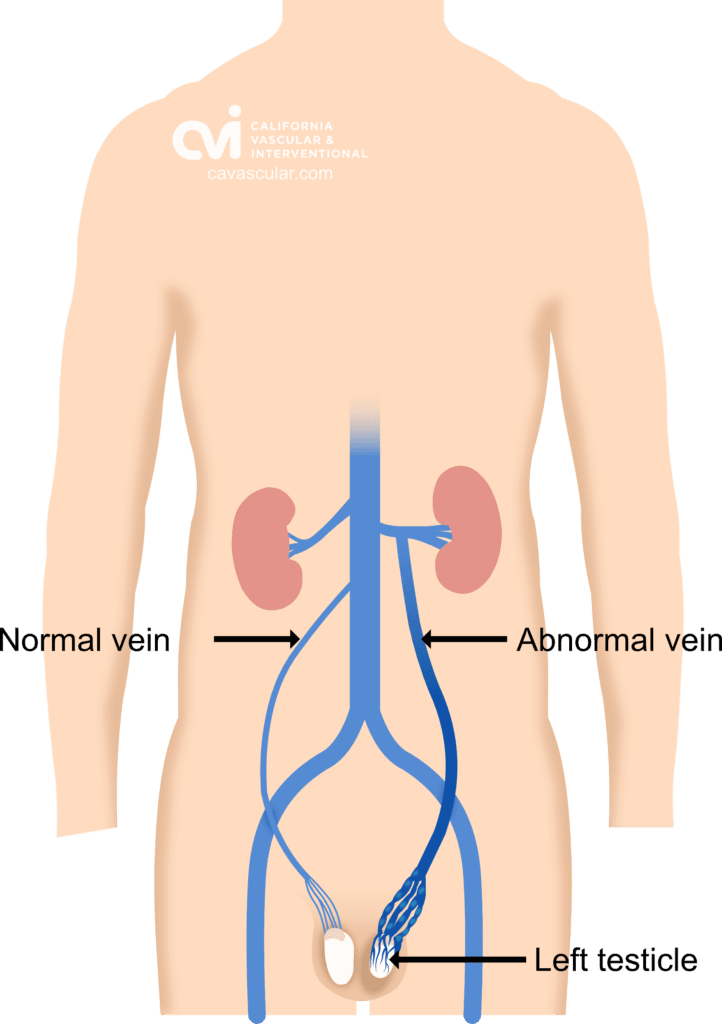
A varicocele is an enlargement of veins within the scrotum
and is similar to having varicose veins in your legs. Because of malfunctioning
valves the blood can therefore pool increasing the pressure in the veins around
the testicle.
A varicocele may present as a swelling (sometimes described
as a ‘bag of worms’) or dull aching discomfort that may be worse on standing
for long periods or on straining. It is associated with a reduced sperm count
and fertility problems (it is thought due to the heating effect of the
distended veins on the testicle).

What is Varicocele Embolization?
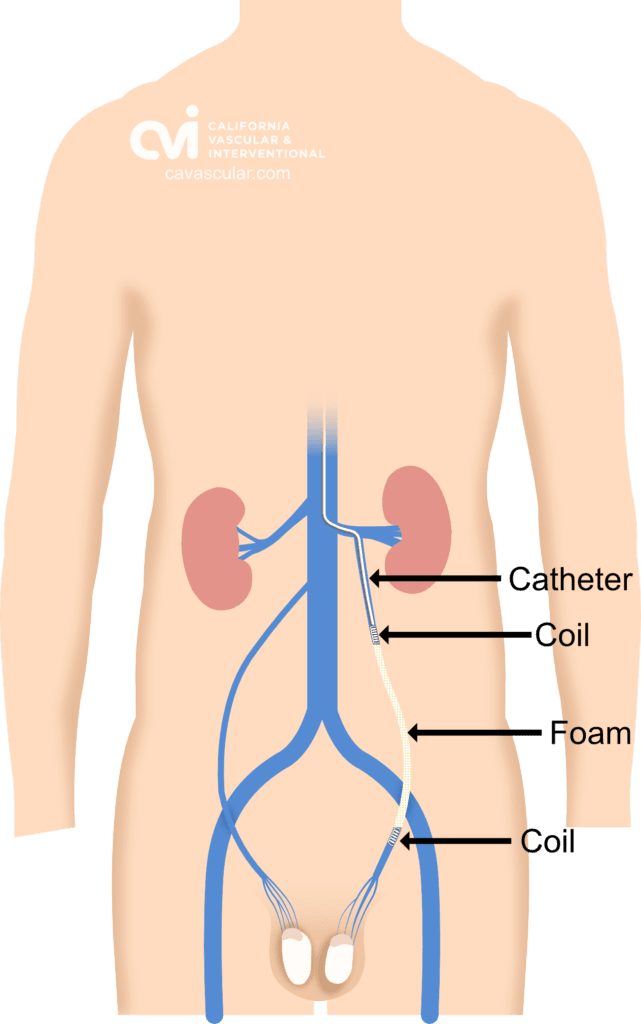
Varicocele can be treated by an embolization procedure or surgery. Embolization is a non-surgical, outpatient, minimally invasive technique that uses x-ray guidance to place tiny coils and embolic fluid in the abnormal blood vessels causing them to close down.
Am I a candidate for Varicocele Embolization?
Treatment is offered for males who have:
- Fertility problems (problems fathering a child)
- Pain
- Boys with a smaller testicle; at a higher risk for fertility problems when they are older
What to expect
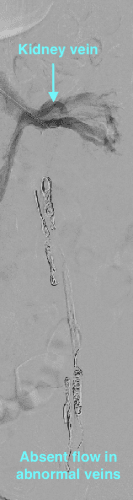
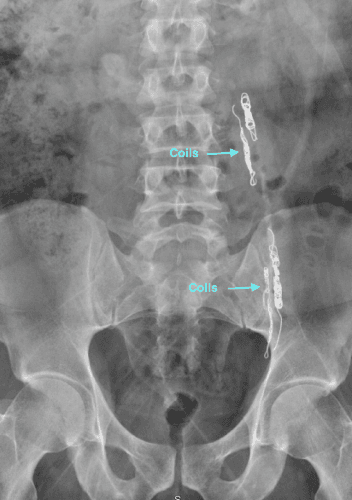
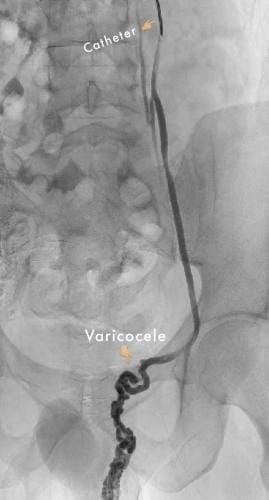
After a local anesthetic, a tiny catheter is placed into a vein in the groin or neck. The Interventional Radiologist then uses the x-ray equipment to guide the catheter into the variococele. A combination of metallic coils and a special fluid are placed directly into the abnormal veins causing them to close. Once the veins are blocked, the catheter is removed.
Results
- Varicocele embolization is the least invasive treatment option compared with surgery and does not need an incision into the scrotum
- There is a lower rate of complications compared to surgery
- Embolization is as effective as surgery when measured by improvement in pain and semen analysis
- Shorter recovery time when compared to surgery
- General anesthesia is not used for embolization, whereas most surgery is done under general anesthetic with the associated risks and side effects
- Embolization is an outpatient procedure so you do not have to stay in hospital overnight
The above information explains what is involved and the possible risks. It is not meant to be a substitute for informed discussion between you and your doctor, but can act as a starting point for such a discussion.
Setup an appointment
The most common correctable cause of male infertility.
Varicocele embolization at a glance
Anesthesia only — no general, fewer risks
Outpatient — no overnight hospital stay
A scrotal varicocele is an enlargement of veins in the scrotum caused by malfunctioning valves that let blood pool around the testicle. It can feel like a “bag of worms” or a dull ache, and the resulting heating effect is associated with a reduced sperm count — making varicocele the most common correctable cause of male infertility.1,3 Varicocele embolization treats it without surgery: through a tiny catheter, X-ray guidance places coils and a sealing fluid into the abnormal veins to close them. No scrotal incision, no general anesthesia, outpatient — and as effective as surgery for pain and semen improvement.4
Enlarged scrotal veins, failed valves
Closes only the abnormal veins
What is a scrotal varicocele?
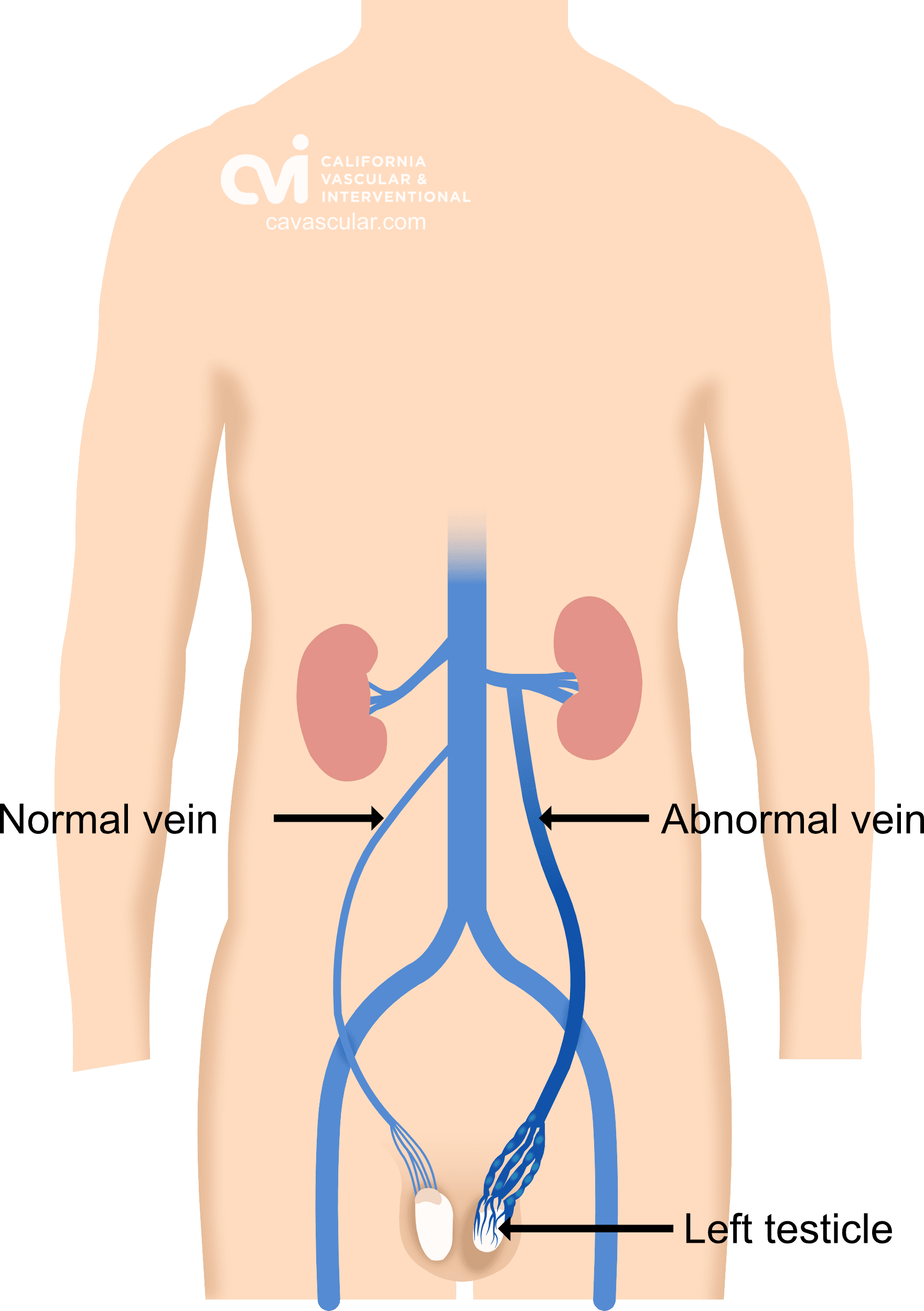
A varicocele is an enlargement of veins within the scrotum — much like having varicose veins in your legs.3
A varicocele is an enlargement of veins within the scrotum and is similar to having varicose veins in your legs. Because of malfunctioning valves, the blood can pool and increase the pressure in the veins around the testicle.3
A varicocele may present as a swelling (sometimes described as a “bag of worms”) or a dull aching discomfort that may be worse when standing for long periods or straining. It is associated with a reduced sperm count and fertility problems — thought to be due to the heating effect of the distended veins on the testicle.3
Varicoceles are common, found in roughly 15% of the general male population, and they are the most common correctable cause of male infertility — identified in a substantially higher proportion of men who are evaluated for difficulty conceiving.1,2
Find out in under a minute – no phone call needed.
Am I a candidate for varicocele embolization?
Treatment is generally offered when a varicocele is causing fertility problems, pain, or affecting testicular growth in an adolescent.2
Treatment is offered for males who have:
- Fertility problems — difficulty fathering a child.2
- Pain — a dull ache or discomfort in the scrotum.
- Boys with a smaller testicle on the affected side, who are at higher risk for fertility problems when they are older.2
How it's confirmed: a consultation and scrotal ultrasound confirm the varicocele, grade its size, and rule out other causes — so treatment is recommended only when it's likely to help.
What is varicocele embolization?
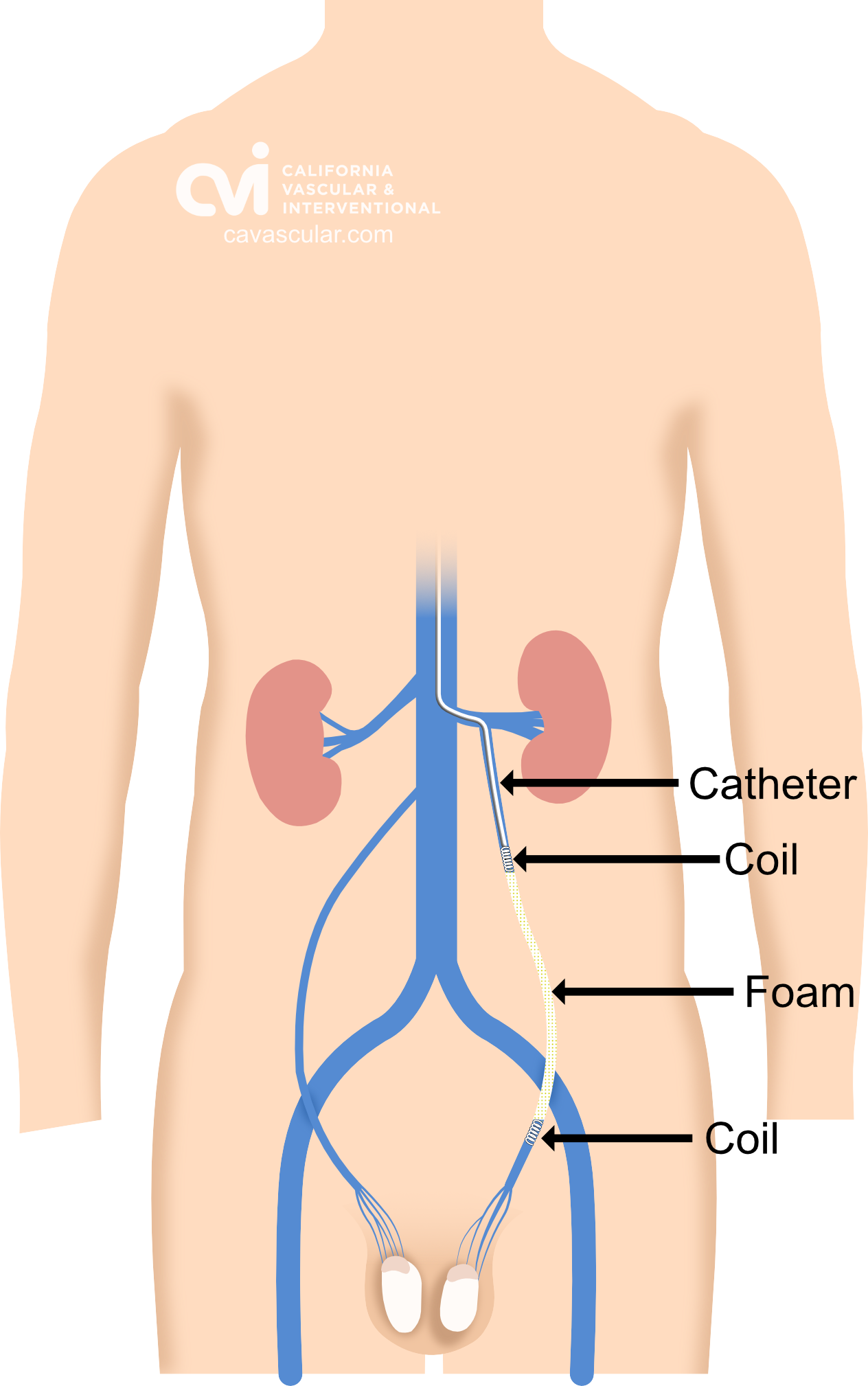
Embolization is a non-surgical, outpatient, minimally invasive technique that uses X-ray guidance to place tiny coils and fluid in the abnormal veins, closing them down.6
A varicocele can be treated by an embolization procedure or by surgery. Embolization is a non-surgical, outpatient, minimally invasive technique that uses X-ray guidance to place tiny coils and an embolic fluid in the abnormal blood vessels, causing them to close down.6
By sealing the faulty veins, embolization redirects blood into healthy drainage pathways, relieving the back-pressure and heating effect around the testicle that are linked to discomfort and impaired sperm production.3 Because it works from inside the vein through a pinhole, there is no incision into the scrotum and no general anesthesia.6
Varicocele embolization is performed by our board-certified Interventional Radiologist — the only specialty in medicine specifically trained to perform embolization procedures. Read more about Interventional Radiology here.
What should you expect during the procedure?
A local anesthetic, a tiny catheter from the groin or neck, X-ray guidance into the varicocele, then coils and fluid to close the veins — and home the same day.
Local anesthetic
A local anesthetic numbs a small access point. No general anesthesia is used.
Tiny catheter — groin or neck
A tiny catheter is placed into a vein in the groin or neck.
X-ray guidance into the varicocele
The interventional radiologist uses X-ray equipment to guide the catheter into the varicocele.
Coils & fluid close the veins
A combination of metallic coils and a special fluid is placed directly into the abnormal veins, causing them to close. The catheter is then removed.
Embolization vs. varicocele surgery
Embolization matches surgery on results — pain relief and semen improvement — while avoiding the incision, the general anesthesia, and the hospital stay.4,6
Varicocele Embolization
- Least invasive option — no incision into the scrotum6
- Lower rate of complications compared to surgery6
- As effective as surgery by pain and semen analysis4
- Shorter recovery time than surgery6
- Local anesthesia only — no general anesthetic
- Outpatient — no overnight hospital stay
Varicocelectomy (Surgery)
- Requires an incision into the scrotum / groin
- Most surgery is done under general anesthetic, with its associated risks and side effects
- Longer recovery time
- Higher rate of complications than embolization6
- May involve a hospital visit
What are the results of varicocele embolization?
Embolization is the least invasive treatment option, with a lower complication rate and results as effective as surgery for pain and semen improvement.4,5,6
- Varicocele embolization is the least invasive treatment option compared with surgery and does not need an incision into the scrotum.6
- There is a lower rate of complications compared to surgery.6
- Embolization is as effective as surgery when measured by improvement in pain and semen analysis.4,5
- Shorter recovery time when compared to surgery.6
- General anesthesia is not used for embolization, whereas most surgery is done under general anesthetic with the associated risks and side effects.
- Embolization is an outpatient procedure, so you do not have to stay in the hospital overnight.
If you are dealing with fertility concerns, scrotal discomfort, or a varicocele found on ultrasound, contact us today to discuss whether embolization is right for you.
A varicocele is a vein problem — and veins are what we do
Varicocele embolization is one of the full range of embolization procedures our specialist performs — from gonadal and pelvic veins to prostate, fibroid, and joint arteries. Closing only the abnormal veins while sparing normal drainage is targeted work.
It matters who holds the wire
Embolization is our field, not a sideline
From varicocele and pelvic veins to prostate, fibroid and joint arteries — thousands of complex embolizations inform every case.
Targeted vein closure
Only the refluxing veins are sealed; healthy drainage is spared. Precision that rewards a steady, practiced hand.
No incision, no general anesthesia
Covered by most insurance
When medically indicated for infertility or pain, varicocele embolization is typically covered — our team helps you check.
Request an Appointment
Please note that although we strive to protect and secure our online communications, and use the security measures detailed in our Privacy Policy to protect your information, no data transmitted over the Internet can be guaranteed to be completely secure and no security measures are perfect or impenetrable. If you would like to transmit sensitive information to us, please contact us, without including the sensitive information, to arrange a more secure means of communication. By submitting this form you consent to receive text messages from CVI at the number provided. Msg & data rates may apply. Msg frequency varies. Unsubscribe at any time by replying STOP.
Who performs your varicocele embolization?
At California Vascular & Interventional, your varicocele embolization is performed by Dr. Atabak Allaei — a board-certified Interventional Radiologist, the only specialty in medicine specifically trained to perform embolization procedures.
It matters who holds the wire. Sealing a varicocele means guiding a catheter into the spermatic vein and closing only the veins that are refluxing — precision work read entirely on live imaging. That level of catheter-and-wire skill is part rigorous training and part innate talent — a steadiness of hand and an ability to visualize the end result that can’t simply be taught.
Atabak Allaei, MD
An image-guided specialist with over 5,000 procedures and thousands of complex embolizations across the full field — gonadal and pelvic veins, prostate, fibroid and joint arteries. Consultations and second opinions by telehealth or in person in Los Angeles, Orange County, and San Diego.
Varicocele embolization: common questions
What is a scrotal varicocele?
A varicocele is an enlargement of the veins within the scrotum, similar to having varicose veins in your legs. Because of malfunctioning valves, blood can pool and increase the pressure in the veins around the testicle. It may present as a swelling (sometimes described as a “bag of worms”) or a dull aching discomfort that can be worse when standing for long periods or straining. It is associated with a reduced sperm count and fertility problems, thought to be due to the heating effect of the distended veins on the testicle.
Why is a varicocele linked to male infertility?
Varicoceles are the most common correctable cause of male infertility. Faulty one-way valves allow blood to flow backward and pool around the testicle, raising the local temperature. This heating effect is thought to impair sperm production and quality, which is why a varicocele is associated with a reduced sperm count. Varicoceles are found in roughly 15% of the general male population and in a substantially higher proportion of men evaluated for infertility.
Am I a candidate for varicocele embolization?
Treatment is generally offered for males who have fertility problems (difficulty fathering a child), pain, or — in adolescents — a smaller testicle on the affected side, which places them at higher risk for fertility problems later in life. A consultation and scrotal ultrasound help confirm the varicocele and determine whether embolization is right for you.
What is varicocele embolization?
Varicocele embolization is a non-surgical, outpatient, minimally invasive technique that uses X-ray guidance to place tiny coils and an embolic fluid in the abnormal veins, causing them to close down. It is an alternative to surgery (varicocelectomy) and requires no scrotal incision and no general anesthesia.
What should I expect during the procedure?
After a local anesthetic, a tiny catheter is placed into a vein in the groin or neck. The interventional radiologist uses X-ray equipment to guide the catheter into the varicocele. A combination of metallic coils and a special fluid is placed directly into the abnormal veins, causing them to close. Once the veins are blocked, the catheter is removed. The procedure is done on an outpatient basis with no overnight hospital stay.
How does embolization compare to surgery?
Varicocele embolization is the least invasive treatment option compared with surgery and does not require an incision into the scrotum. It has a lower rate of complications, a shorter recovery time, and does not use general anesthesia — whereas most surgery is performed under general anesthetic with its associated risks. Importantly, embolization is as effective as surgery when measured by improvement in pain and semen analysis, and it is performed as an outpatient procedure with no overnight hospital stay.
Is varicocele treatment covered by insurance?
Varicocele embolization is typically covered by most insurance plans when it is medically indicated — for example, for infertility, pain, or testicular growth concerns in adolescents. Our team can help review your coverage during the consultation process. We offer consultations by telehealth or in person in Los Angeles, Orange County, and San Diego.
Why choose California Vascular & Interventional for varicocele embolization?
The procedure is performed by our board-certified Interventional Radiologist — the only specialty in medicine specifically trained to perform embolization. Varicocele embolization is one of the full range of embolization procedures our specialist performs, from gonadal and pelvic veins to prostate, fibroid, and joint arteries, backed by over 5,000 image-guided procedures and thousands of complex embolizations. Closing only the abnormal veins while sparing normal drainage is targeted work that rewards superior catheter-and-wire skill.
The above information explains what is involved and the possible risks. It is not meant to be a substitute for informed discussion between you and your doctor, but can act as a starting point for such a discussion.
Explore related treatments
Enlarged Prostate (PAE)
Scrotal Hydrocele
Spermatocele
Pelvic Congestion Syndrome
Varicose Veins
Meet Our Specialist
Treat the vein, not the scrotum
If a varicocele is affecting your fertility or causing discomfort, it can be sealed through a pinhole — no incision, no general anesthesia, no overnight stay. Request a consultation with our specialist, by telehealth or in person in Los Angeles, Orange County or San Diego. Most insurance plans cover treatment when medically indicated.