
How Important is Choosing the Right Vascular Specialist?
You may have a vascular specialist. You may have been referred to a specialist or just had a consultation. This is what you need to know in choosing the right specialist before committing to any procedure. No two specialist are similar in skill, effort, technique or outcome. But most importantly, your referring doctor is unlikely to know who is best without actually having seen a surgical case performed, an unlikely scenario. You may have been referred out of habit.
Why is choosing the right specialist more important than ever? Because there are effective minimally invasive non-surgical treatments instead of invasive surgeries (discussed below). However, if your vascular specialist is unskilled, unsuccessful or has a complication then you will be referred to have bypass surgery or amputation. This can be life changing. You may be told that this is your only option. You may not know any better without seeking a second opinion. It is better to get it right from the start by choosing the right specialist. So how do you do that?
Vascular disease is treated by Interventional Radiologists, Vascular Surgeons and Cardiologists. These treatments require a high level of catheter and wire skill, decision making, and best practice to ensure success. To make sure that you have the best specialist here are the four questions you must ask:
- What is the rate of success and complication? If a specialist has done 1,000 procedures but had 200 complications and 100 failures, this isn’t good. In fact, terrible. Our specialist has a 95% success rate with less than 1% complication rate.
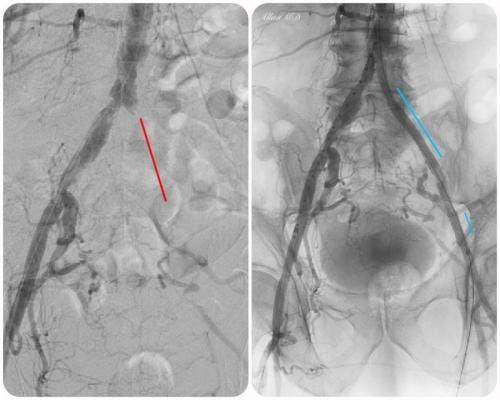
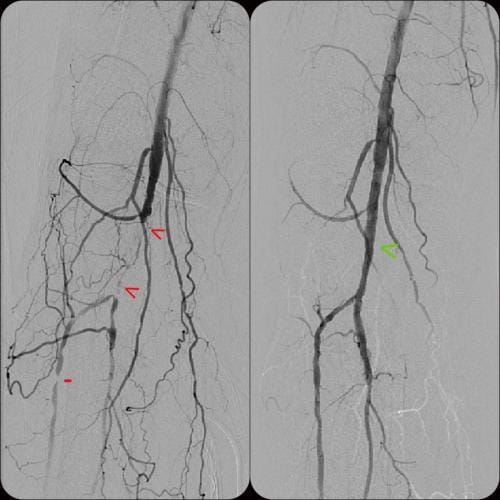
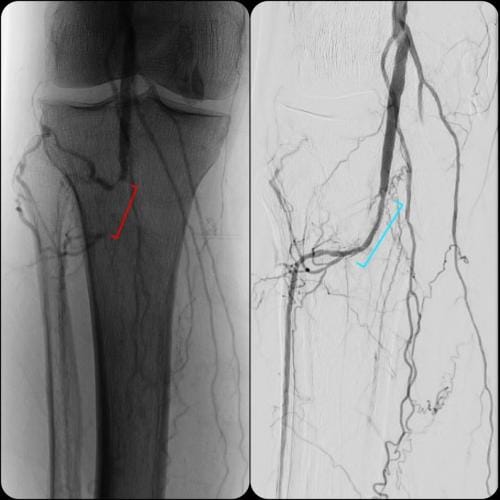
- What is the experience? Choose a specialist that has a proven record of tackling difficult cases successfully. Some specialist choose to only do the simple procedures and refer the rest to surgery. Additionally, if the specialist can only perform simple procedures they may have a higher rate of complication if the case turns out to be more difficult than expected. Our specialist has performed numerous successful complex procedures from the groin, knee and foot. See our prior cases here.
- Is the specialist involved in continued learning to provide up-to date treatments? A lot of times specialist become content in what they are doing and no longer follow up on changes in technology and practice techniques providing substandard care. Our practice does not cut corners and provides our specialist with the best tools needed for success. Conference attendance also updates our practice to provide the best techniques. Read about our practice here.
- Does the specialist have the right motivations? The specialist should have your best interest in mind. If they are rushed with little time for effort they maybe more inclined to refer for surgery or alternate treatment. Read about our specialist here.
We are happy to evaluate your case and be your vascular specialist or provide you with a second opinion. Simply fill our contact form at the bottom of this page
Peripheral Arterial Disease
Peripheral Artery Disease (PAD) is a medical condition characterized by narrowing of the arteries in the legs, causing a reduction in circulation to peripheral arterial diseasethe toes, feet and legs. This can occur as a result of smoking, high cholesterol, diabetes or high blood pressure. The arteries can narrow or completely be blocked reducing the blood supply to the legs. The cramping symptoms are worse on exercising because the narrowed arteries cannot meet the muscles demand for oxygen. Left untreated, PAD can lead to amputation and put you or your loved one’s quality of life and long-term health at serious risk.
With an early diagnosis, you may have more treatment options and may have a better chance to reduce or eliminate your symptoms.
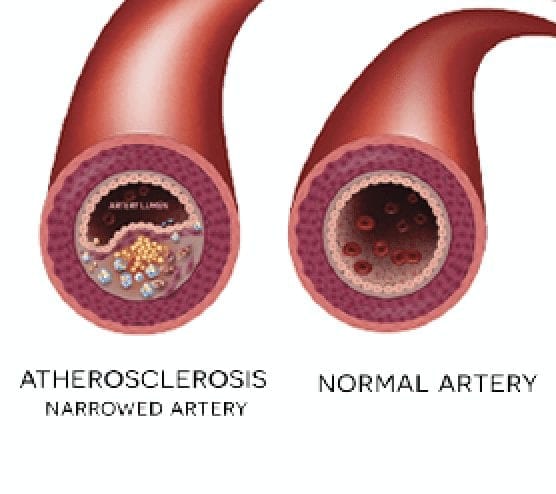
What are the symptoms of PVD?
Many people with PVD have no symptoms. If symptoms do occur, they can include:
- Pain in the muscles of the calves, thighs or hips that gets worse with activity
- Achy, tired, or heavy feeling in the legs
- Weakness, numbness, tingling, or loss of feeling in the legs
- Changes in skin color of the legs
- Sores on the legs and feet
- Cold leg, feet, or toes
- Pain the feet or toes even when lying down (rest pain)
Treatment Options
Your doctor may recommend lifestyle changes, such as eating healthier and exercising. A doctor may also prescribe medication to treat risk factors like high blood pressure, cholesterol or diabetes. After those options are tried, or if your condition is severe enough, your doctor or PAD specialist may recommend the below treatment options
Non-Surgical Image-Guided Procedures
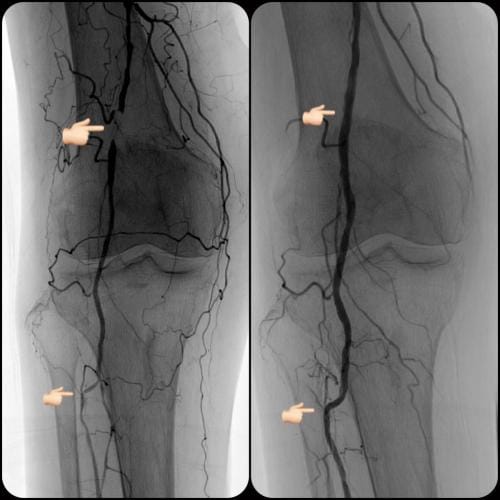
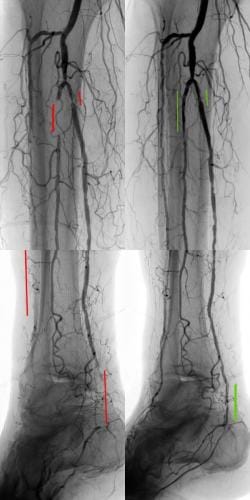
During these procedures: Sedation is given to help you relax. Next, a tiny tube is gently inserted in an artery, usually in the groin or upper thigh area. You will be given a local anesthetic to numb the area where the tube will be inserted. It is then guided through the blood vessel toward the disease artery. When it’s in place, a dye is injected through the catheter to visualize the arteries. An X-ray is taken to help the physician pinpoint the area that is blocked or narrowed. The physician then uses tiny wires and catheters to get through the diseased vessels. Depending on the images treatment may then be performed.
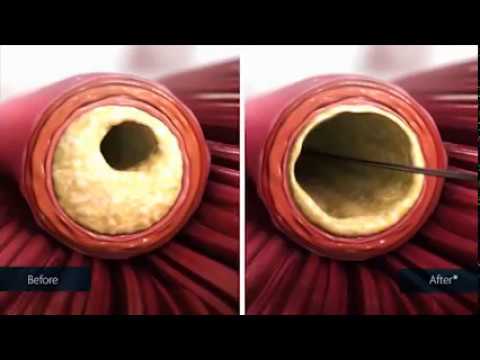
Angioplasty — a special catheter that has a balloon on one end is advanced into the diseased artery. This is temporarily inserted through the narrowed artery and inflated to flatten the plaque against the artery wall, opening the artery and restoring blood flow.
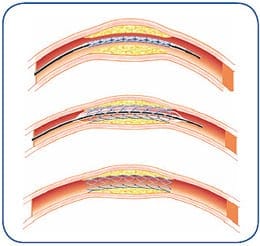
Stent placement —a stent is a small, expandable, leg pain angioplasty stent los Angeles san diegomesh-like tube that supports the artery and helps to keep it open. Implanting a stent does not require open surgery. The doctor inserts a catheter into an artery in your arm or leg, similar to the balloon angioplasty procedure. A specially designed catheter delivers the stent to the narrow area in the artery. The stent is expanded, flattening the plaque against the artery wall and holding the artery open with a mesh tube. The catheter used to deliver the stent is then removed, but the stent stays in your artery permanently to maintain healthy blood flow.
Atherectomy — a specialized catheter that modifies the plaque in the arteries. Unlike angioplasty and stenting, which are designed to move plaque to the sides, atherectomy involves cutting and removing or sanding down the plaque from the artery, restoring normal blood flow.
Surgical Options:
Surgical endarterectomy — During this procedure, a doctor makes a small incision (cut) along the blocked or narrowed artery and physically removes the plaque. In some cases, the blocked portion of the blood vessel is also removed. After the plaque has been removed, the artery is closed with stitches or by a patch made from your own vein or synthetic material.
Bypass surgery — This procedure uses a graft – either a healthy blood vessel from another part of the body, or a synthetic tube – to reroute the blood flow around a blocked artery and create a new, permanent pathway for blood to flow. The procedure is done in a hospital under general anesthesia. The doctor makes a small opening near the blockage in the diseased artery. The graft is then attached (grafted) above and below the blockage, creating a new passageway for blood to flow (bypass) around the blocked artery.
Advantages of Image-Guided Procedures
- Less invasive
- Quick recovery
- Lower risk
- Lower cost when compared to surgery, such as bypass
- Does not require general anesthesia
- Outpatient so you go home the same day
- No stitches or major incision
Our Vascular and Interventional Radiologist will devise an individualized treatment plan designed to minimize pain, cure sores, avoid amputation, and improve the overall quality of life for our patients. It is our goal to stay on top of all disease progression to keep you on your feet. Patient care does not end after a procedure. Follow-up appointments are scheduled to evaluate recovery and results, and personable staff members and physicians will be available to help with questions or concerns after every procedure, diagnostic test, and appointment. We are dedicated to giving each patient the best possible experience and results.
Why Our Specialist?
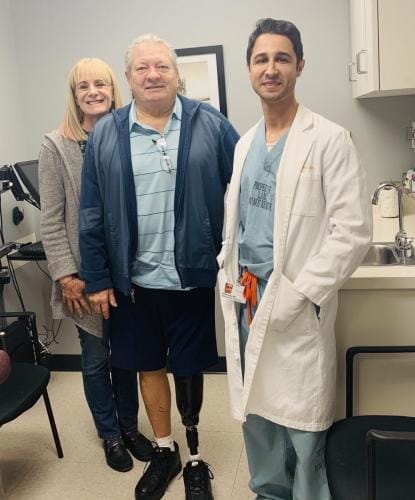
Superior catheter and wire skills is essential in a delicate procedure such as treating blocked arteries. We treat a number of patients that have had failures by other specialists. Our doctor is an image-guided specialist having performed over 5,000 procedures with successful experience in venous and arterial blockages. Having a wide array of experience in different image-guided procedures brings a unique skill set to ensure that you have the most successful outcome without complication. Rest assured that our specialist can not only complete simple procedures like other centers, but he has a consistent history of successfully treating complex cases.
We have a high success rate at CVI not only because our physician is expertly skilled but also because we provide the physician with the best tools needed to open the blocked vessels. The choice of wires and catheters that are placed through the vasculature are essential to provide the best chance at success. Unlike other clinics you can rest assured that at CVI we do not cut corners and only purchase the best and highest quality tools that our specialist requires.
If you have had a treatment failure elsewhere, seek a second opinion by seeing our vascular specialist.
The above information explains what is involved and the possible risks. It is not meant to be a substitute for informed discussion between you and your doctor, but can act as a starting point for such a discussion.
Setup an appointment
With blocked leg arteries, the specialist you choose changes everything.
PAD narrows the arteries in your legs — cramping when you walk, sores that won’t heal and, left untreated, a real risk of amputation. Image-guided angioplasty, stenting, and atherectomy can reopen those arteries without surgery. But outcomes depend on who holds the wire: Dr. Atabak Allaei is one of the most experienced and trusted vascular specialists — over 5,000 image-guided procedures, a consistent record with complex arterial cases, and the second opinion patients seek after being told surgery was their only option.
PAD treatment at a glance
Typical procedure time for most treatments
Outpatient — home within hours
Comfortable throughout — no general anesthesia
Image-guided procedures — one of the most experienced vascular specialists
Peripheral Arterial Disease (PAD) is a narrowing of the leg arteries — from smoking, high cholesterol, diabetes, or high blood pressure — that reduces circulation to the toes, feet, and legs, causing cramping with activity and, left untreated, risk of amputation. It can be treated without surgery: through a tiny tube in the groin or thigh, Dr. Allaei reopens the artery with angioplasty (balloon), stenting (mesh tube), or atherectomy (plaque removal) — about an hour for most treatments, under moderate sedation — outpatient, no general anesthesia, no stitches, home the same day. Early diagnosis means more options and a better chance to reduce or eliminate your symptoms.
Tiny tube — no bypass, no major incision
Angioplasty · stent · atherectomy
Comfortable, no general anesthesia
One of the most experienced specialists
What is peripheral arterial disease?
PAD is a narrowing of the arteries in the legs that reduces circulation to the toes, feet, and legs — and left untreated, it can lead to amputation.
Peripheral Artery Disease (PAD) is a medical condition characterized by narrowing of the arteries in the legs, causing a reduction in circulation to the toes, feet and legs. This can occur as a result of smoking, high cholesterol, diabetes or high blood pressure. The arteries can narrow or completely be blocked reducing the blood supply to the legs. The cramping symptoms are worse on exercising because the narrowed arteries cannot meet the muscles’ demand for oxygen. Left untreated, PAD can lead to amputation and put you or your loved one’s quality of life and long-term health at serious risk.
Early diagnosis matters. With an early diagnosis, you may have more treatment options and may have a better chance to reduce or eliminate your symptoms.
Find out in under a minute – no phone call needed.
What are the symptoms of PAD (PVD)?
Many people have no symptoms at all — but leg cramping with activity, sores, cold feet, or pain even at rest are warning signs.
Many people with PVD have no symptoms. If symptoms do occur, they can include:
- Pain in the muscles of the calves, thighs or hips that gets worse with activity
- Achy, tired, or heavy feeling in the legs
- Weakness, numbness, tingling, or loss of feeling in the legs
- Changes in skin color of the legs
- Sores on the legs and feet
- Cold leg, feet, or toes
- Pain in the feet or toes even when lying down (rest pain)
What are the treatment options for PAD?
Lifestyle changes and medication come first. When more is needed, image-guided procedures reopen the artery without surgery — angioplasty, stenting, or atherectomy.
Your doctor may recommend lifestyle changes, such as eating healthier and exercising. A doctor may also prescribe medication to treat risk factors like high blood pressure, cholesterol or diabetes. After those options are tried, or if your condition is severe enough, your doctor or PAD specialist may recommend the below treatment options.
Non-surgical image-guided procedures — what we do
Angioplasty
A special catheter that has a balloon on one end is advanced into the diseased artery. This is temporarily inserted through the narrowed artery and inflated to flatten the plaque against the artery wall, opening the artery and restoring blood flow.
Stent placement
A stent is a small, expandable, mesh-like tube that supports the artery and helps to keep it open. Implanting a stent does not require open surgery. The doctor inserts a catheter into an artery in your arm or leg, similar to the balloon angioplasty procedure. A specially designed catheter delivers the stent to the narrow area in the artery. The stent is expanded, flattening the plaque against the artery wall and holding the artery open with a mesh tube. The catheter used to deliver the stent is then removed, but the stent stays in your artery permanently to maintain healthy blood flow.
Atherectomy
A specialized catheter that modifies the plaque in the arteries. Unlike angioplasty and stenting, which are designed to move plaque to the sides, atherectomy involves cutting and removing or sanding down the plaque from the artery, restoring normal blood flow.
Surgical options — we don't perform these
Surgical endarterectomy
During this procedure, a doctor makes a small incision (cut) along the blocked or narrowed artery and physically removes the plaque. In some cases, the blocked portion of the blood vessel is also removed. After the plaque has been removed, the artery is closed with stitches or by a patch made from your own vein or synthetic material.
Bypass surgery
This procedure uses a graft — either a healthy blood vessel from another part of the body, or a synthetic tube — to reroute the blood flow around a blocked artery and create a new, permanent pathway for blood to flow. The procedure is done in a hospital under general anesthesia. The doctor makes a small opening near the blockage in the diseased artery. The graft is then attached (grafted) above and below the blockage, creating a new passageway for blood to flow (bypass) around the blocked artery.
Image-Guided Procedures
- Less invasive — no major incision
- Quick recovery, lower risk
- Lower cost when compared to surgery, such as bypass
- Does not require general anesthesia
- Outpatient — you go home the same day
- No stitches
Endarterectomy & Bypass
- Incision along the artery to remove plaque (endarterectomy)
- Graft rerouting blood around the blockage (bypass)
- Done in a hospital
- Requires general anesthesia
- Closed with stitches or a patch
- Where unskilled endovascular care can end up
How are the image-guided procedures performed?
Sedation, a tiny tube in the groin or thigh, dye and X-ray to pinpoint the blockage — then wires and catheters cross it, and the artery is reopened.
Moderate sedation & numbing
Moderate sedation is given to help you relax — no general anesthesia — and a local anesthetic numbs the area where the tube will be inserted.
Tiny tube into the artery
A tiny tube is gently inserted in an artery, usually in the groin or upper thigh area, and guided through the blood vessel toward the diseased artery.
Map the blockage
Dye is injected through the catheter to visualize the arteries, and an X-ray helps the physician pinpoint the area that is blocked or narrowed.
Cross it — then open it
The physician uses tiny wires and catheters to get through the diseased vessels. Depending on the images, treatment is performed — angioplasty, stent, or atherectomy. Most treatments take about an hour, and you go home the same day.
During these procedures: Sedation is given to help you relax. Next, a tiny tube is gently inserted in an artery, usually in the groin or upper thigh area. You will be given a local anesthetic to numb the area where the tube will be inserted. It is then guided through the blood vessel toward the diseased artery. When it’s in place, a dye is injected through the catheter to visualize the arteries. An X-ray is taken to help the physician pinpoint the area that is blocked or narrowed. The physician then uses tiny wires and catheters to get through the diseased vessels. Depending on the images treatment may then be performed. Most treatments take about an hour under moderate sedation, and you go home the same day.
What are the advantages of image-guided PAD treatment?
Everything bypass surgery isn't: outpatient, no general anesthesia, no stitches — at lower risk and lower cost.
- Less invasive
- Lower risk
- Does not require general anesthesia
- No stitches or major incision
- Moderate sedation keeps you comfortable
- Quick recovery
- Lower cost when compared to surgery, such as bypass
- Outpatient so you go home the same day
- About an hour for most treatments
Care that doesn't end at the procedure. Our Vascular and Interventional Radiologist will devise an individualized treatment plan designed to minimize pain, cure sores, avoid amputation, and improve the overall quality of life for our patients. It is our goal to stay on top of all disease progression to keep you on your feet. Follow-up appointments are scheduled to evaluate recovery and results, and personable staff members and physicians will be available to help with questions or concerns after every procedure, diagnostic test, and appointment. We are dedicated to giving each patient the best possible experience and results.
How important is choosing the right vascular specialist?
No two specialists are similar in skill, effort, technique or outcome — and your referring doctor is unlikely to know who is best without having seen a case performed. You may have been referred out of habit.
You may have a vascular specialist. You may have been referred to a specialist or just had a consultation. This is what you need to know in choosing the right specialist before committing to any procedure.
Why is choosing the right specialist more important than ever? Because there are effective minimally invasive non-surgical treatments instead of invasive surgeries. However, if your vascular specialist is unskilled, unsuccessful or has a complication then you will be referred to have bypass surgery or amputation. This can be life changing. You may be told that this is your only option. You may not know any better without seeking a second opinion. It is better to get it right from the start by choosing the right specialist. So how do you do that?
Vascular disease is treated by Interventional Radiologists, Vascular Surgeons and Cardiologists. These treatments require a high level of catheter and wire skill, decision making, and best practice to ensure success. To make sure that you have the right specialist, here are the four questions you must ask:
What is the rate of success and complication?
If a specialist has done 1,000 procedures but had 200 complications and 100 failures, this isn’t good. In fact, terrible. Our specialist maintains a consistently high success rate with a very low rate of complications — a track record we’re glad to discuss at your consultation.
What is the experience?
Choose a specialist with a proven record of tackling difficult cases successfully. Some specialists choose to only do the simple procedures and refer the rest to surgery — and if they can only perform simple procedures, they may have a higher rate of complication if the case turns out to be more difficult than expected. Our specialist has performed numerous successful complex procedures from the groin, knee and foot. See our prior cases here.
Is the specialist involved in continued learning?
A lot of times specialists become content in what they are doing and no longer follow up on changes in technology and practice techniques, providing substandard care. Our practice does not cut corners and provides our specialist with the best tools needed for success. Conference attendance also updates our practice to provide the best techniques. Read about our practice here.
Does the specialist have the right motivations?
The specialist should have your best interest in mind. If they are rushed with little time for effort they may be more inclined to refer for surgery or alternate treatment. Read about our specialist here.
We are happy to evaluate your case and be your vascular specialist or provide you with a second opinion. Simply request a consultation below.
Superior catheter and wire skills — where PAD outcomes are decided
Superior catheter and wire skills are essential in a delicate procedure such as treating blocked arteries. We treat a number of patients that have had failures by other specialists.
Our doctor is an image-guided specialist having performed over 5,000 procedures with successful experience in venous and arterial blockages. Having a wide array of experience in different image-guided procedures brings a unique skill set to ensure that you have the most successful outcome without complication. Rest assured that our specialist can not only complete simple procedures like other centers, but he has a consistent history of successfully treating complex cases.
It matters who holds the wire
A track record worth asking about
Ask any vascular specialist about their success and complication rates before committing. Ours is a record of consistently high success with very few complications — built across 5,000+ image-guided procedures.
Exceptional catheter-and-wire skill
Crossing diseased vessels takes a steadiness of hand that’s part training, part innate talent — the difference between an open artery and a referral for bypass.
Complex cases — groin, knee & foot
The best tools, no corners cut
The choice of wires and catheters is essential to success. Unlike other clinics, CVI purchases only the best and highest quality tools our specialist requires.
Request an Appointment
Please note that although we strive to protect and secure our online communications, and use the security measures detailed in our Privacy Policy to protect your information, no data transmitted over the Internet can be guaranteed to be completely secure and no security measures are perfect or impenetrable. If you would like to transmit sensitive information to us, please contact us, without including the sensitive information, to arrange a more secure means of communication. By submitting this form you consent to receive text messages from CVI at the number provided. Msg & data rates may apply. Msg frequency varies. Unsubscribe at any time by replying STOP.
Who performs your PAD treatment?
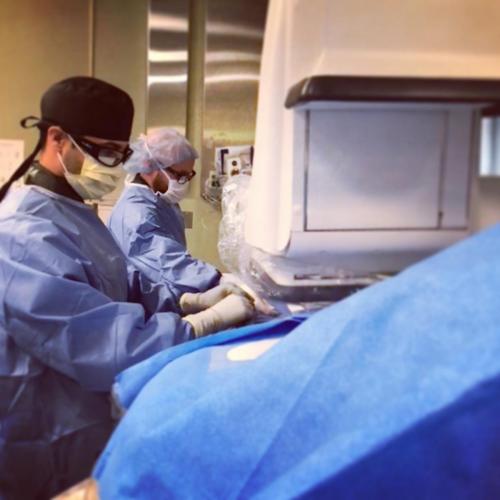
At California Vascular & Interventional, your angioplasty, stenting, or atherectomy is performed by Dr. Atabak Allaei — by the physician, start to finish, with follow-up care that continues after the procedure to stay on top of disease progression and keep you on your feet.
It matters who holds the wire. Treating blocked arteries means crossing hardened, diseased vessels with tiny wires and catheters — reading a flat, 2D X-ray while navigating a 3D vascular tree, and making the right call between balloon, stent, and atherectomy as the images unfold. That level of catheter-and-wire skill is part rigorous training and part innate talent — a steadiness of hand and an ability to visualize the end result that can’t simply be taught.
Atabak Allaei, MD
An image-guided specialist with over 5,000 procedures and successful experience in venous and arterial blockages, Dr. Allaei maintains a consistently high success rate with a very low rate of complications. Most treatments take about an hour under moderate sedation, on an outpatient basis. He has a consistent history of successfully treating complex cases from the groin, knee, and foot — including patients who have had treatment failures with other specialists. All procedures are physician-performed. Consultations and second opinions by telehealth or in person in Los Angeles, Orange County, and San Diego.
PAD treatment: common questions
What is peripheral arterial disease (PAD)?
Peripheral Artery Disease (PAD) is a medical condition characterized by narrowing of the arteries in the legs, causing a reduction in circulation to the toes, feet, and legs. It can occur as a result of smoking, high cholesterol, diabetes, or high blood pressure. The arteries can narrow or become completely blocked, reducing the blood supply to the legs. Cramping symptoms are worse with exercise because the narrowed arteries cannot meet the muscles’ demand for oxygen.
What are the symptoms of PAD (also called PVD)?
Many people with peripheral vascular disease have no symptoms. When symptoms occur, they can include pain in the muscles of the calves, thighs, or hips that gets worse with activity; an achy, tired, or heavy feeling in the legs; weakness, numbness, tingling, or loss of feeling in the legs; changes in skin color of the legs; sores on the legs and feet; cold legs, feet, or toes; and pain in the feet or toes even when lying down (rest pain).
What happens if PAD is left untreated?
Left untreated, PAD can lead to amputation and put you or your loved one’s quality of life and long-term health at serious risk. With an early diagnosis, you may have more treatment options and a better chance to reduce or eliminate your symptoms.
What are the treatment options for PAD?
Your doctor may first recommend lifestyle changes, such as eating healthier and exercising, and may prescribe medication to treat risk factors like high blood pressure, cholesterol, or diabetes. After those options are tried, or if the condition is severe enough, a PAD specialist may recommend non-surgical image-guided procedures — angioplasty, stent placement, or atherectomy — or, in some cases, surgical options such as endarterectomy or bypass surgery.
How are the non-surgical image-guided PAD procedures performed?
Sedation is given to help you relax, and a local anesthetic numbs the insertion site. A tiny tube is gently inserted into an artery, usually in the groin or upper thigh, and guided toward the diseased artery. Dye is injected to visualize the arteries and an X-ray pinpoints the blocked or narrowed area. The physician then uses tiny wires and catheters to get through the diseased vessels, and depending on the images, performs angioplasty, stenting, or atherectomy. The procedures are outpatient — no general anesthesia, no stitches or major incision, home the same day.
What is the difference between angioplasty, stenting, and atherectomy?
Angioplasty uses a balloon-tipped catheter, temporarily inflated in the narrowed artery to flatten the plaque against the artery wall, opening the artery and restoring blood flow. Stent placement delivers a small, expandable, mesh-like tube that is expanded against the plaque and stays in the artery permanently to hold it open. Atherectomy uses a specialized catheter that modifies the plaque itself — cutting and removing or sanding it down — rather than pushing it to the sides. Your specialist chooses based on the imaging during the procedure.
What are the advantages of image-guided PAD treatment over bypass surgery?
Image-guided procedures are less invasive with a quick recovery, lower risk, and lower cost compared to surgery such as bypass. They do not require general anesthesia, are outpatient so you go home the same day, and involve no stitches or major incision. Bypass surgery, by contrast, is done in a hospital under general anesthesia, using a graft to reroute blood flow around the blocked artery.
How do I choose the right vascular specialist for PAD?
No two specialists are similar in skill, effort, technique, or outcome — and if a vascular specialist is unskilled or has a complication, the result can be a referral for bypass surgery or amputation. Ask four questions: (1) What is the rate of success and complication? Our specialist maintains a consistently high success rate with a very low rate of complications. (2) What is the experience? Choose a specialist with a proven record of tackling difficult cases — ours has performed numerous successful complex procedures from the groin, knee, and foot. (3) Is the specialist involved in continued learning to provide up-to-date treatments? (4) Does the specialist have the right motivations, with your best interest in mind? We are happy to evaluate your case or provide a second opinion.
Explore related treatments
Varicose Veins
Spider Veins
Knee Osteoarthritis (GAE)
All Leg Pain Treatments
Case Gallery
Meet Our Specialist
Stay on your feet — get it right from the start
If leg cramping, sores, or cold feet are slowing you down — or if you’ve been told bypass or amputation is your only option — get a consultation or a second opinion before committing to anything. Dr. Allaei will evaluate your case personally, by telehealth or in person in Los Angeles, Orange County or San Diego.