Setup an appointment
Pelvic pain no one could explain? It may be your veins.
Vein embolization at a glance
Of women improve within 2–4 weeks
Closure of the abnormal veins — no general anesthesia
Pelvic congestion syndrome (PCS) is essentially varicose veins of the ovaries and pelvis: damaged vein valves let blood flow backward and pool, enlarging the veins and causing chronic pelvic pain — usually in women who have had 2–3 children. Ovarian vein embolization is the gold-standard treatment: through a tiny nick in the skin, Dr. Allaei seals the abnormal veins with tiny coils and a specialized fluid — outpatient, no general anesthesia, no stitches, home with a Band-Aid. Up to 80% of women report improvement within the first 2–4 weeks.
Moderate sedation keeps you comfortable
Improve within 2–4 weeks
Find out in under a minute – no phone call needed.
What is pelvic venous congestion syndrome?
PCS is essentially varicose veins of the ovaries — failed vein valves let blood pool in the pelvis, enlarging the veins and causing chronic pain.
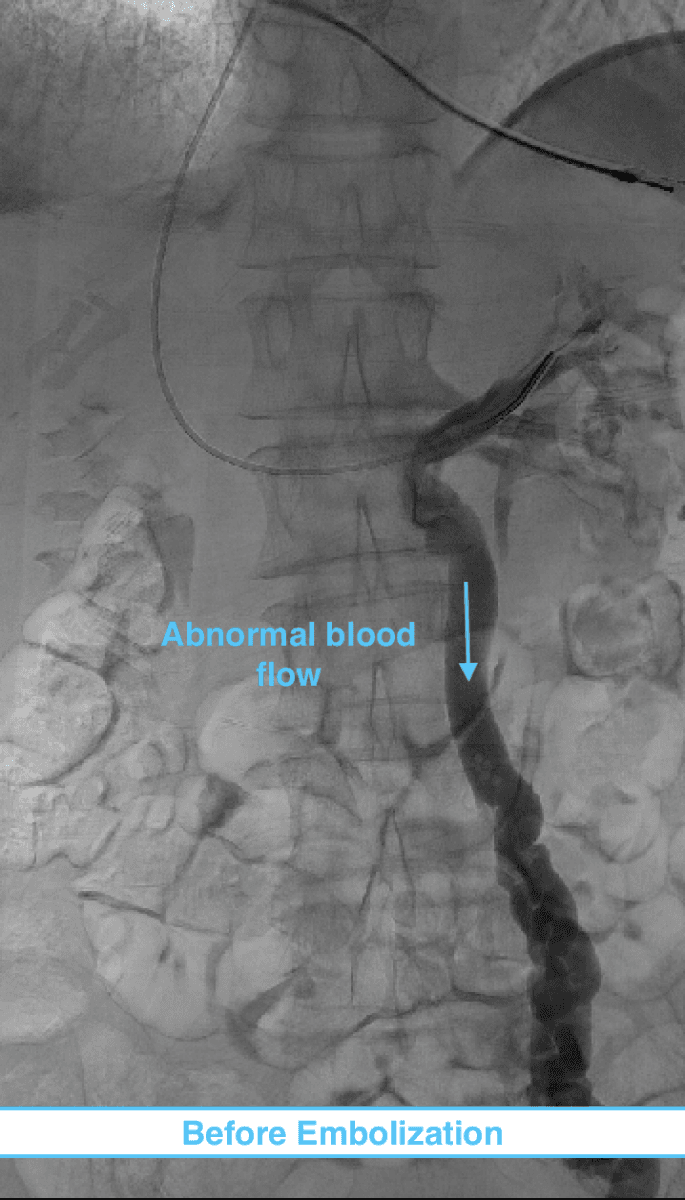
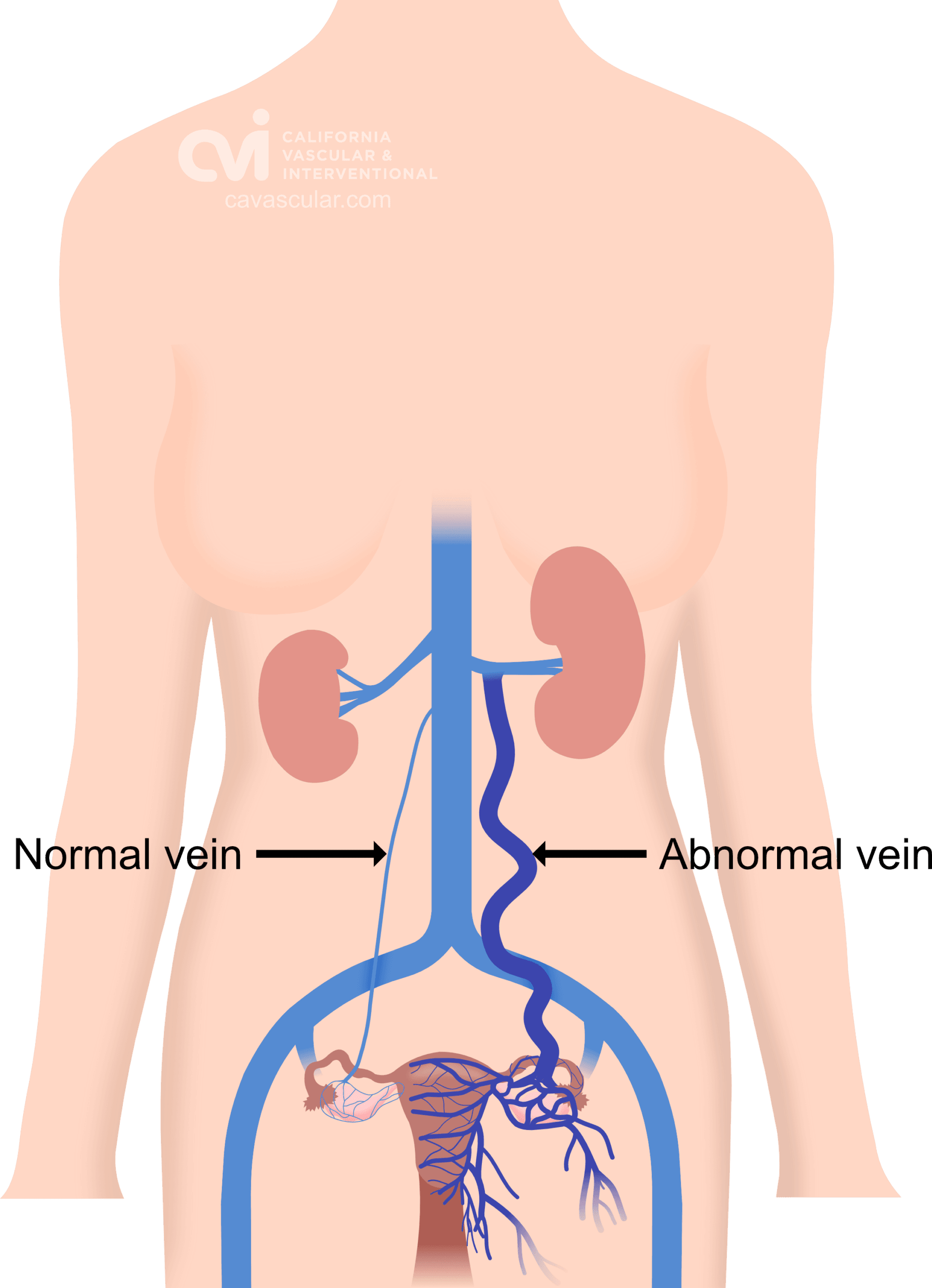
Pelvic Congestion Syndrome (PCS) or Pelvic Venous Congestion Syndrome (PVCS) is essentially varicose veins of the ovaries. Varicose veins are most commonly seen in the legs and are caused by the veins becoming less elastic resulting in abnormal flow of blood causing it to pool in certain areas, leading to enlarged painful veins. This is also what happens to the pelvic veins in pelvic congestion syndrome.
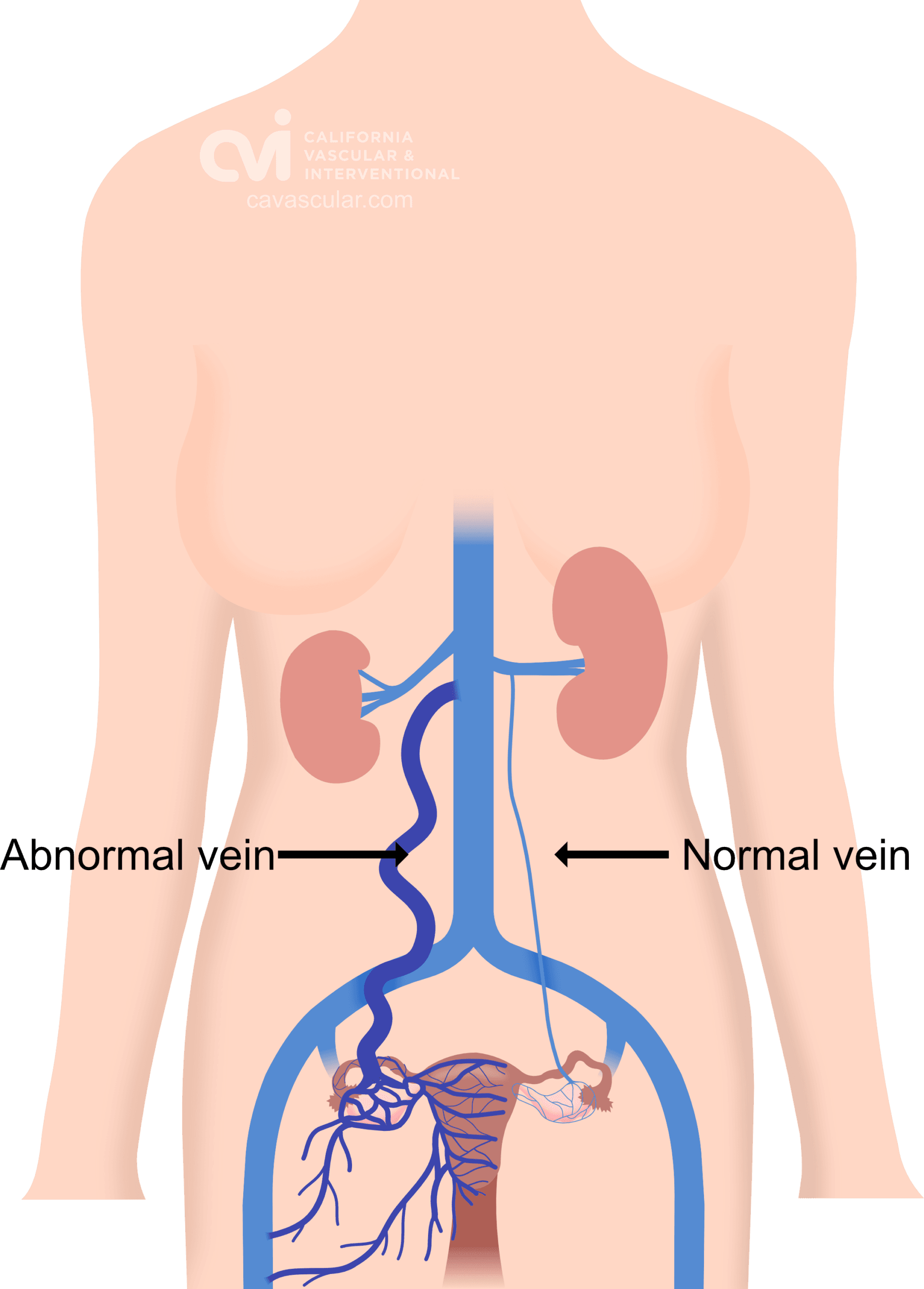
PCS most commonly occurs in young women, and usually in women who have had at least 2-3 children. During pregnancy the ovarian vein can be compressed by the womb or increase in size because of the required increased blood flow. This is thought to damage the valves causing them to stop working resulting in abnormal blood flow backwards. This pressure build up causes the pain of PCS and may also cause visible varicose veins around the vulva, vagina, inner thigh, sometimes the buttock and down the leg(s).
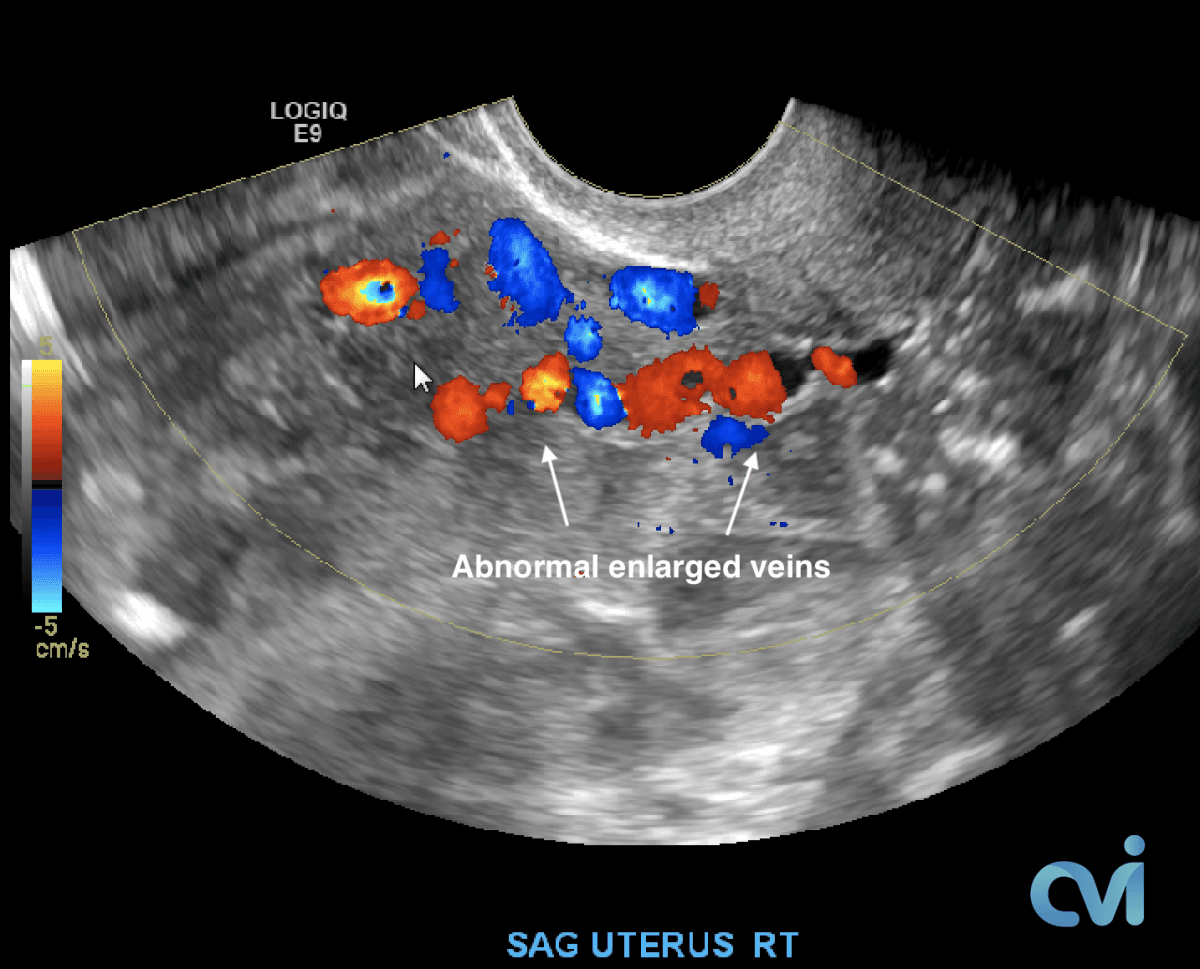
The abnormal veins dilate and cause varicose veins around the ovary and uterus because the valves don’t work properly. Blood flow is in the wrong direction, pooling in the veins and causing them to enlarge.
What are the treatment options?
Embolization is the gold standard — it closes the abnormal veins directly. Hysterectomy, hormones, and surgery each leave the problem veins behind or demand far more from you.
Embolization
The gold standard for treatment is closure of the abnormal veins, similar to varicose veins in the legs. This is called “Ovarian vein embolization.” This is an outpatient procedure that requires no general anesthesia. Read below for further details.
Hysterectomy
Hysterectomy is sometimes offered however this is not ideal as the abnormal varicose veins are left behind. If there is persistent chronic pain after hysterectomy, ovarian vein embolization is either very difficult or not possible.
Conservative management
Conservative management with hormones is also an option. There are a few medical drug treatments (medroxyprogesterone acetate or more recently, goserelin), which has been shown to be somewhat effective in reducing pain and the size of the varicose veins. This will not however eliminate the abnormal veins and will require continuous medical therapy.
Surgery
Other treatment options are open or laparoscopic surgery to tie the culprit veins. Both these procedures are more invasive than ovarian vein embolization and require a general anesthetic and a longer recovery period. Abnormal veins can also be left behind requiring repeat surgery or ovarian vein embolization.
Ovarian Vein Embolization
- Closes the abnormal veins directly — the source of the pain
- Outpatient — tiny nick in the skin, Band-Aid only
- No general anesthesia, no stitches, no major incisions
- No hospital stay or significant downtime
- Least invasive of the options
- Up to 80% of women improve within 2–4 weeks
Hysterectomy · Hormones · Surgery
- Hysterectomy leaves the abnormal varicose veins behind
- Pain persisting after hysterectomy makes embolization very difficult or impossible
- Hormones don't eliminate the veins — continuous therapy required
- Open/laparoscopic vein-tying is more invasive
- Surgery requires general anesthesia and a longer recovery
- Veins can be left behind, requiring repeat treatment
What is ovarian vein embolization?
A non-surgical outpatient procedure through a tiny nick in the skin — the abnormal veins are sealed with tiny coils and a specialized fluid, and you go home with a Band-Aid.
Numbing & moderate sedation
Our image-guided specialist numbs the skin — moderate sedation keeps you comfortable, with no general anesthesia.
Catheter placed under ultrasound
Navigate to the abnormal veins
Seal the veins & go home
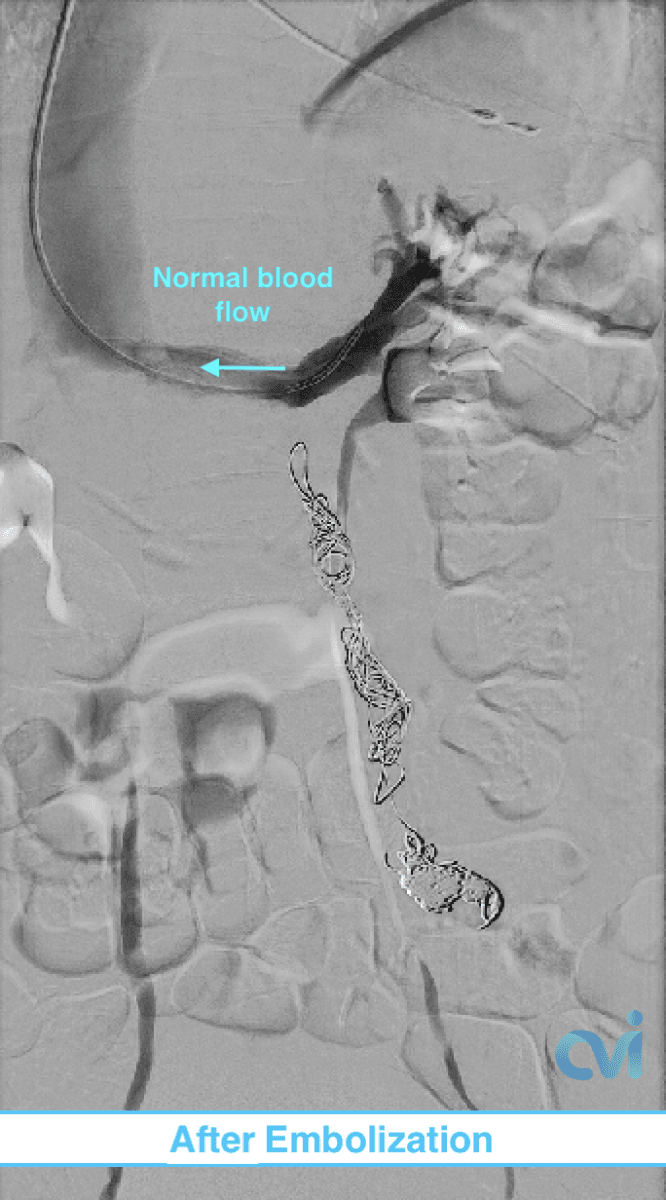
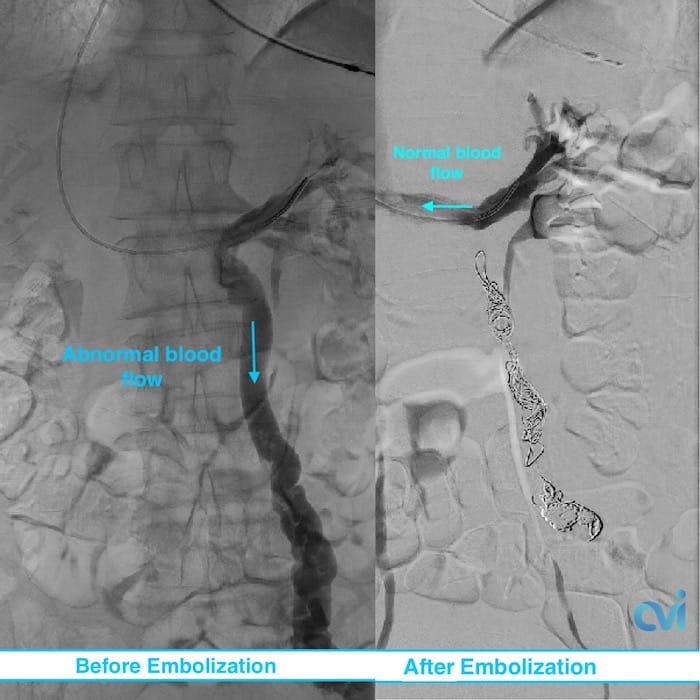
Tiny coils and a specialized fluid seal the vein down, restoring normal blood flow — no stitches, no hospital stay, home with a Band-Aid.
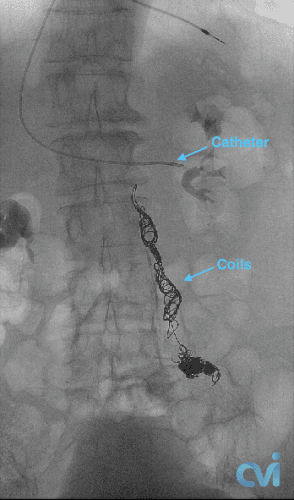
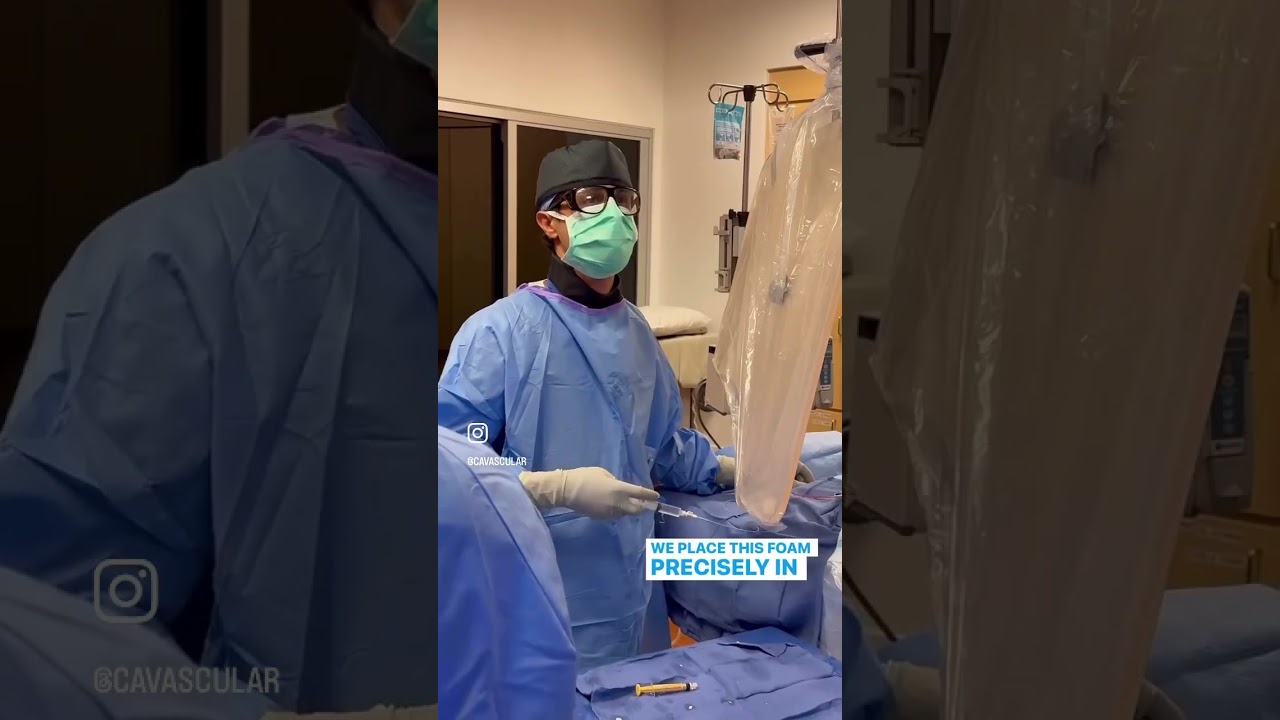
During this procedure, our image-guided specialist will numb the skin and insert a catheter (a tiny tube) into a vein in the neck or groin. The placement is done with precision using ultrasound guidance minimizing pain. Using x-ray guidance a smaller catheter is then guided into the abnormal ovarian or pelvic veins. The abnormal vein is then treated by placing tiny coils and a specialized fluid causing the vein to seal down. This then restores normal blood flow in the body and improves related symptoms.
There are no stitches, major incisions, hospital stay requirements, or significant downtime. Patients go home with a Band-Aid.

Am I a candidate for ovarian vein embolization?
If pelvic pain has lasted more than 6 months — worse on standing, during your period, or after intercourse, and better lying down — you may be a candidate.
If you are experiencing any of the below symptoms you may be a candidate for embolization:
- Pelvic pain or aching around the pelvis and lower abdomen
- Bulging veins around the vulva, groin, leg, perineum or buttocks
- Swollen vulva
- Dragging sensation or pain in the pelvis
- Feeling of fullness in the legs
- Low back pain
- Hemorrhoids
- Worsening of stress incontinence
- Worsening in the symptoms associated with irritable bowel syndrome
Pain is usually present for over 6 months, on one side but can affect both sides. The pain is worse on standing, lifting, when you are tired, during pregnancy and during or after sexual intercourse. The veins are also affected by the menstrual cycle/hormones and therefore the pain can increase during the time of menstruation. The pain usually is improved by lying down.
You don't need to suffer. Accurate diagnostic tests and effective treatment options are available.
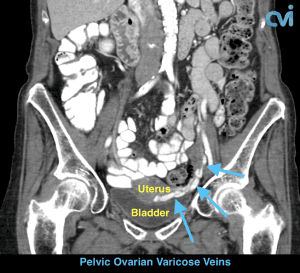
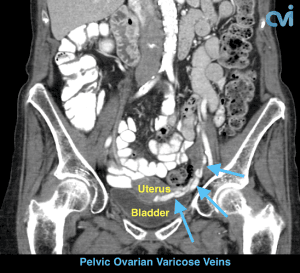
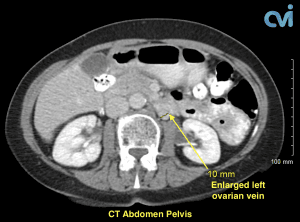
How is pelvic congestion syndrome diagnosed?
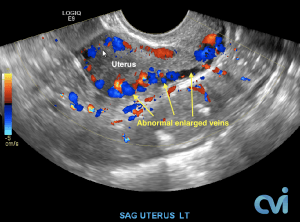
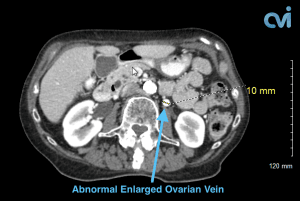
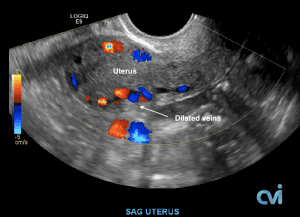
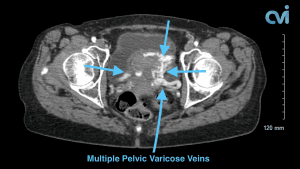
By ultrasound or CT of the abdomen and pelvis — but PCS is easy to miss, which is why our specialist personally reviews all of your imaging.
PCS can be diagnosed by Ultrasound or CT of the Abdomen and Pelvis.
Ultrasound examination is the least invasive study and can identify enlarged veins around the uterus and pelvis. However, sometimes the veins in the pelvis are difficult to see or can be missed if the technician is not specifically looking in the right area.
Magnetic resonance imaging (MRI) and computed tomography (CT) is another method to diagnose pelvic congestion syndrome. Our practice requires a CT of the Abdomen and Pelvis with contrast prior to treatment. This allows us to see where the varicose veins are coming from so that we can plan and do the appropriate treatment. Sometimes there are abnormal pelvic veins in addition to the ovarian veins that need treatment. Sometimes PCS can be missed on CT if the contrast injection is not timed appropriately or the vein is not directly measured.
Our specialist who is also a Board Certified Radiologist will review all of your imaging personally to make sure an accurate diagnosis is made. Following an accurate diagnosis, you can then undergo the Ovarian Vein Embolization procedure.
Want to go deeper on diagnosis? Read our guide: What is the Best Way to Diagnose Pelvic Congestion Syndrome?
What are the benefits of ovarian vein embolization?
Outpatient, Band-Aid only, no general anesthesia — and up to 80% of women improve within the first 2–4 weeks.
- Outpatient — go home the same day
- No general anesthesia
- Minimally invasive — only requires a Band-Aid
- Proven safe and effective
- No stitches
- Least invasive
- No major incisions
- Up to 80% improve in 2–4 weeks
Result: Embolization is a safe and effective treatment with minimal downtime and risk. Up to 80% of women report an improvement in symptoms within the first 2-4 weeks after embolization.
A diagnosis that's easy to miss — and hands trained to fix it
Pelvic veins are missed on ultrasound when no one looks in the right place, and missed on CT when the contrast timing is off. The difference is who reads your imaging — and who holds the wire.
Your imaging, read personally — your veins, treated by expert hands
Embolizing pelvic veins means steering a hair-thin catheter and wire from a vein in the neck or groin down into the ovarian and pelvic veins — reading a 2D X-ray while navigating a 3D venous tree, and placing coils and specialized fluid only where they belong. That level of catheter-and-wire skill is part rigorous training, part innate talent. Dr. Atabak Allaei refined it at the Mallinckrodt Institute (Washington University/Barnes-Jewish) and through thousands of complex embolizations in high-stakes organs — the uterus, kidney, liver, prostate, and lung. Dual board-certified in interventional radiology and diagnostic imaging, on staff at Cedars-Sinai and UCI Health, he personally reviews every patient’s imaging — so a PCS diagnosis that others miss gets caught, and treated, by the same specialist.
He personally reads your imaging
PCS is missed when no one looks in the right place. A board-certified radiologist reviews all of your imaging personally, so the diagnosis is accurate before anything is treated.
Exceptional wire skills, Mallinckrodt-trained
The catheter-and-wire dexterity vein embolization depends on is part training, part innate talent — refined at Washington University’s Mallinckrodt Institute.
Deep women's-health embolization
From uterine fibroid embolization to fallopian tube work to pelvic veins — a women’s-health embolization practice, backed by 5,000+ image-guided procedures.
A no-pressure consultation
Telehealth or in person — your symptoms and imaging reviewed, a contrast CT mapped before any treatment, and every option explained before you decide anything.
Request an Appointment
Please note that although we strive to protect and secure our online communications, and use the security measures detailed in our Privacy Policy to protect your information, no data transmitted over the Internet can be guaranteed to be completely secure and no security measures are perfect or impenetrable. If you would like to transmit sensitive information to us, please contact us, without including the sensitive information, to arrange a more secure means of communication. By submitting this form you consent to receive text messages from CVI at the number provided. Msg & data rates may apply. Msg frequency varies. Unsubscribe at any time by replying STOP.
Who performs your ovarian vein embolization?
At California Vascular & Interventional, your embolization is performed by Dr. Atabak Allaei — the same board-certified radiologist who personally reviews your imaging and confirms the diagnosis. He is one of the most experienced and trusted embolization specialists, with a deep women’s-health embolization practice.
It matters who holds the wire. Embolizing pelvic veins means steering a hair-thin catheter from a vein in the neck or groin down into the abnormal ovarian and pelvic veins — reading a flat, 2D X-ray while navigating a 3D venous tree, and sealing only the abnormal veins with coils and specialized fluid. That level of catheter-and-wire skill is part rigorous training and part innate talent — a steadiness of hand and an ability to visualize the end result that can’t simply be taught. Dr. Allaei refined that aptitude through fellowship training at the prestigious Mallinckrodt Institute of Radiology at Washington University/Barnes-Jewish Medical Center, and through thousands of complex embolizations in high-stakes organs — the uterus, kidney, liver, prostate, and lung. He serves on staff at Cedars-Sinai Medical Center in Beverly Hills and UCI Health, and is the Medical Director of California Vascular & Interventional.
Atabak Allaei, MD
Dual board-certified in Vascular & Interventional Radiology and Diagnostic Imaging — a combination that pairs detailed diagnostic interpretation with precise procedural treatment, exactly what a frequently-missed diagnosis like PCS demands. Fellowship-trained at the Mallinckrodt Institute of Radiology (Washington University/Barnes-Jewish), on staff at Cedars-Sinai and UCI Health, and Medical Director of CVI, he has performed more than 5,000 image-guided procedures, with deep women’s-health embolization experience spanning the uterus (UFE), ovarian and pelvic veins, and fallopian tubes. Consultations by telehealth or in person in Los Angeles, Orange County, and San Diego.
Pelvic congestion syndrome: common questions
What is pelvic congestion syndrome (PCS)?
Pelvic congestion syndrome (PCS), or pelvic venous congestion syndrome (PVCS), is essentially varicose veins of the ovaries and pelvis. Just as leg varicose veins form when veins become less elastic and blood pools abnormally, the valves in the pelvic and ovarian veins can stop working, blood flows backward and pools, and the veins enlarge — causing chronic pelvic pain and sometimes visible varicose veins around the vulva, vagina, inner thigh, buttock, or down the legs.
What causes pelvic congestion syndrome?
PCS most commonly occurs in young women, and usually in women who have had at least 2–3 children. During pregnancy, the ovarian vein can be compressed by the womb or increase in size because of the required increase in blood flow. This is thought to damage the valves, causing them to stop working, resulting in abnormal backward blood flow. The pressure build-up causes the pain of PCS and can create varicose veins around the ovary and uterus.
What are the symptoms of pelvic congestion syndrome — and am I a candidate for embolization?
You may be a candidate for embolization if you experience pelvic pain or aching around the pelvis and lower abdomen, bulging veins around the vulva, groin, leg, perineum or buttocks, a swollen vulva, a dragging sensation or pain in the pelvis, a feeling of fullness in the legs, low back pain, hemorrhoids, worsening stress incontinence, or worsening irritable bowel syndrome symptoms. The pain is usually present for over 6 months, often on one side but sometimes both, worse on standing, lifting, when tired, during pregnancy, and during or after intercourse, often increases with menstruation, and typically improves when lying down.
How is pelvic congestion syndrome diagnosed?
PCS can be diagnosed by ultrasound or CT of the abdomen and pelvis. Ultrasound is the least invasive study and can identify enlarged veins around the uterus and pelvis, but the veins can be missed if the technician is not specifically looking in the right area. MRI and CT are other methods; PCS can also be missed on CT if the contrast injection is not timed appropriately or the vein is not directly measured. Our practice requires a CT of the abdomen and pelvis with contrast prior to treatment so the source of the varicose veins can be mapped, and our specialist — a board-certified radiologist — personally reviews all imaging to make sure an accurate diagnosis is made.
What is ovarian vein embolization?
Ovarian vein embolization is the gold-standard treatment for pelvic congestion syndrome — closure of the abnormal veins, similar to treating varicose veins in the legs. It is a non-surgical outpatient procedure performed through a tiny nick in the skin, sealing the abnormal ovarian or pelvic veins with tiny coils and a specialized fluid to restore normal blood flow and improve symptoms. There are no stitches, major incisions, hospital stays, or significant downtime — patients go home with a Band-Aid.
How is ovarian vein embolization performed?
The image-guided specialist numbs the skin and inserts a catheter into a vein in the neck or groin, placed with precision under ultrasound guidance to minimize pain, while moderate sedation keeps you comfortable — no general anesthesia. Using X-ray guidance, a smaller catheter is guided into the abnormal ovarian or pelvic veins, which are sealed with tiny coils and a specialized fluid. Patients go home the same day with a Band-Aid.
How effective is ovarian vein embolization?
Embolization is a safe and effective treatment with minimal downtime and risk. Up to 80% of women report an improvement in symptoms within the first 2–4 weeks after embolization. It is outpatient, minimally invasive (Band-Aid only), requires no stitches, major incisions, or general anesthesia, and is the least invasive of the treatment options.
Is embolization better than hysterectomy, hormones, or surgery for PCS?
Embolization is the gold standard because it closes the abnormal veins directly. Hysterectomy is sometimes offered but is not ideal — the abnormal varicose veins are left behind, and if chronic pain persists after hysterectomy, ovarian vein embolization becomes very difficult or not possible. Hormonal treatments (medroxyprogesterone acetate or goserelin) can somewhat reduce pain and vein size but do not eliminate the abnormal veins and require continuous therapy. Open or laparoscopic surgery to tie the culprit veins is more invasive, requires general anesthesia and a longer recovery, and abnormal veins can still be left behind, requiring repeat surgery or embolization.
Explore related treatments
Uterine Fibroids (UFE)
Fallopian Tube Recanalization
Varicose Veins
All Women's Health Treatments
What is Interventional Radiology?
Meet Our Specialist
You don't need to suffer
If pelvic pain has shadowed you for months — worse on your feet, worse with your cycle, easier only when you lie down — there may be a vein-based answer no one has looked for yet. Request a consultation and Dr. Allaei will personally review your imaging, confirm whether PCS is the cause, and walk you through every option before any decision is made. Telehealth or in person in Los Angeles, Orange County or San Diego.