
Spermatocele Sclerotherapy
Treat a spermatocele without surgery.
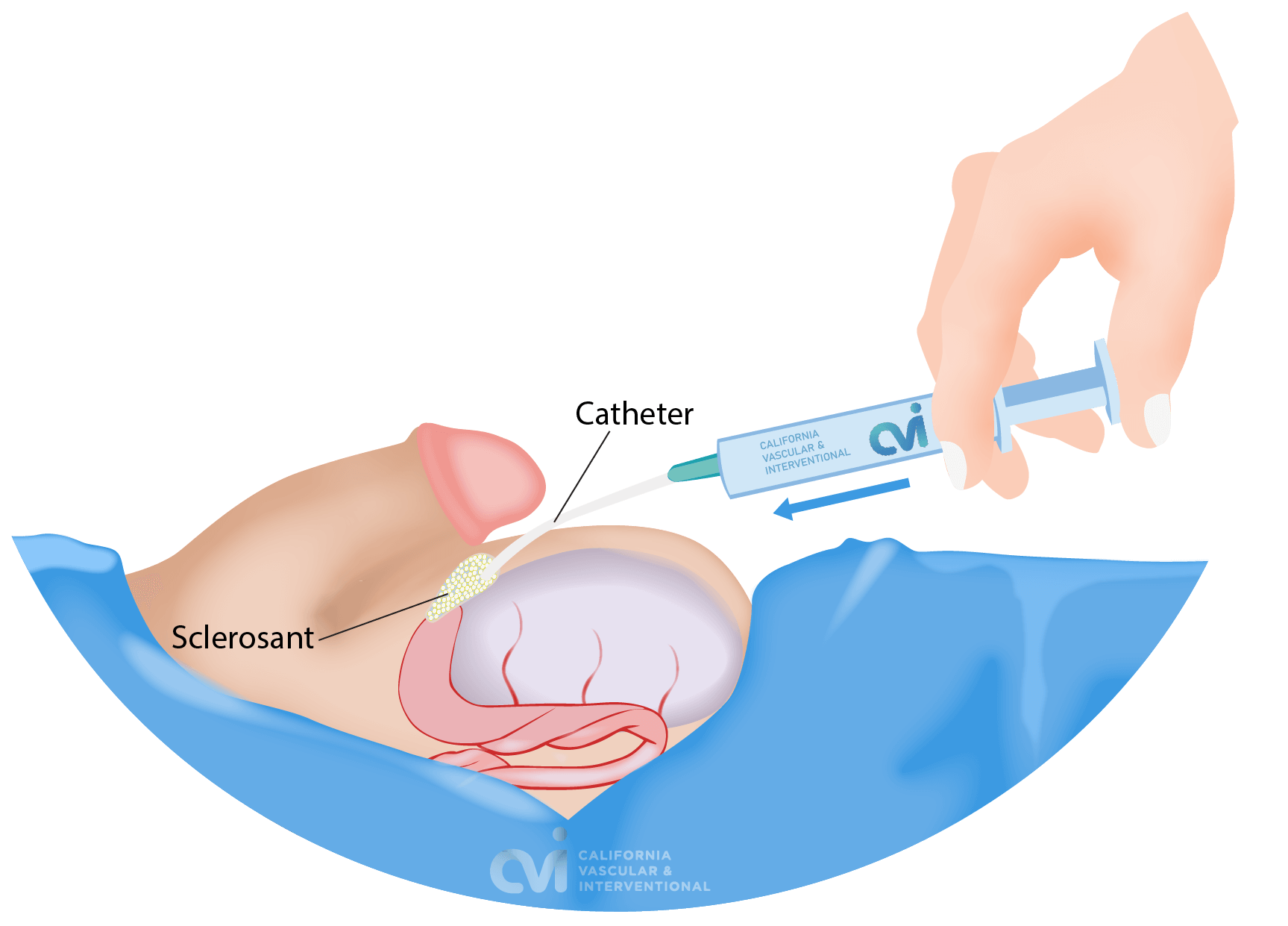
Spermatocele sclerotherapy is a minimally invasive, ultrasound-guided procedure that drains a spermatocele (epididymal cyst) and injects a medication that closes the cavity so the fluid doesn't return. No incision, no stitches, no downtime. Performed in the office by Dr. Atabak Allaei, a double board-certified interventional radiologist.
Spermatocele sclerotherapy at a glance
An ultrasound-guided procedure under local anesthesia — you walk out of the office afterward.
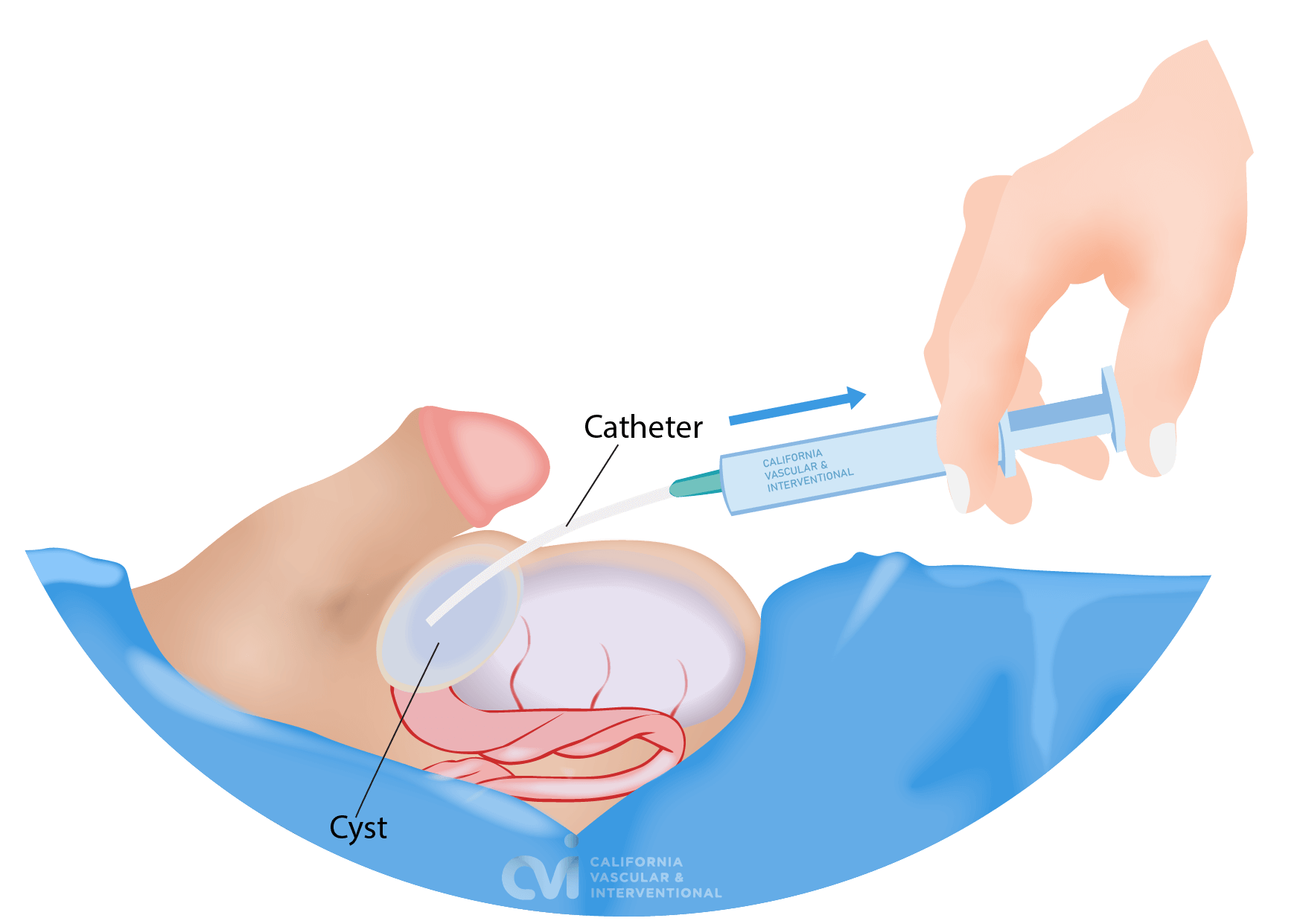
Spermatocele sclerotherapy is a minimally invasive, ultrasound-guided outpatient procedure that treats a spermatocele (epididymal cyst). Under local anesthesia, Dr. Allaei drains the fluid through a small tube (aspiration), confirms on ultrasound that it is completely empty, then injects a medication that closes the cavity — no incision, no stitches and no downtime. It succeeds in more than 75% of patients after one treatment and nearly 95% with repeat treatment.
Key takeaways: spermatocele sclerotherapy
- Non-surgical and in-office: performed under local anesthesia with no incisions, stitches or downtime.
- Ultrasound-guided: continuous imaging confirms all fluid is drained and protects the testicle and surrounding structures.
- High success: more than 75% success after a single treatment, and about 95% with repeat treatment.
- Return to work immediately — no athletic support, ice packs or bandaging needed.
- Avoids surgical risk: in one study, nearly 20% of patients had complications after surgical spermatocelectomy.
- Fertility-conscious: no dissection near the epididymis or vas deferens.
Self-pay treatment
Sclerotherapy is not covered by insurance. Contact our office for current pricing.
What is a spermatocele?
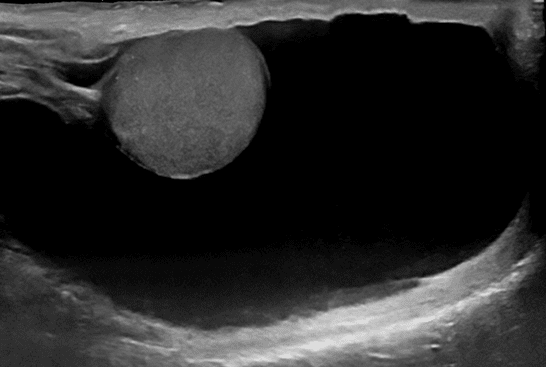
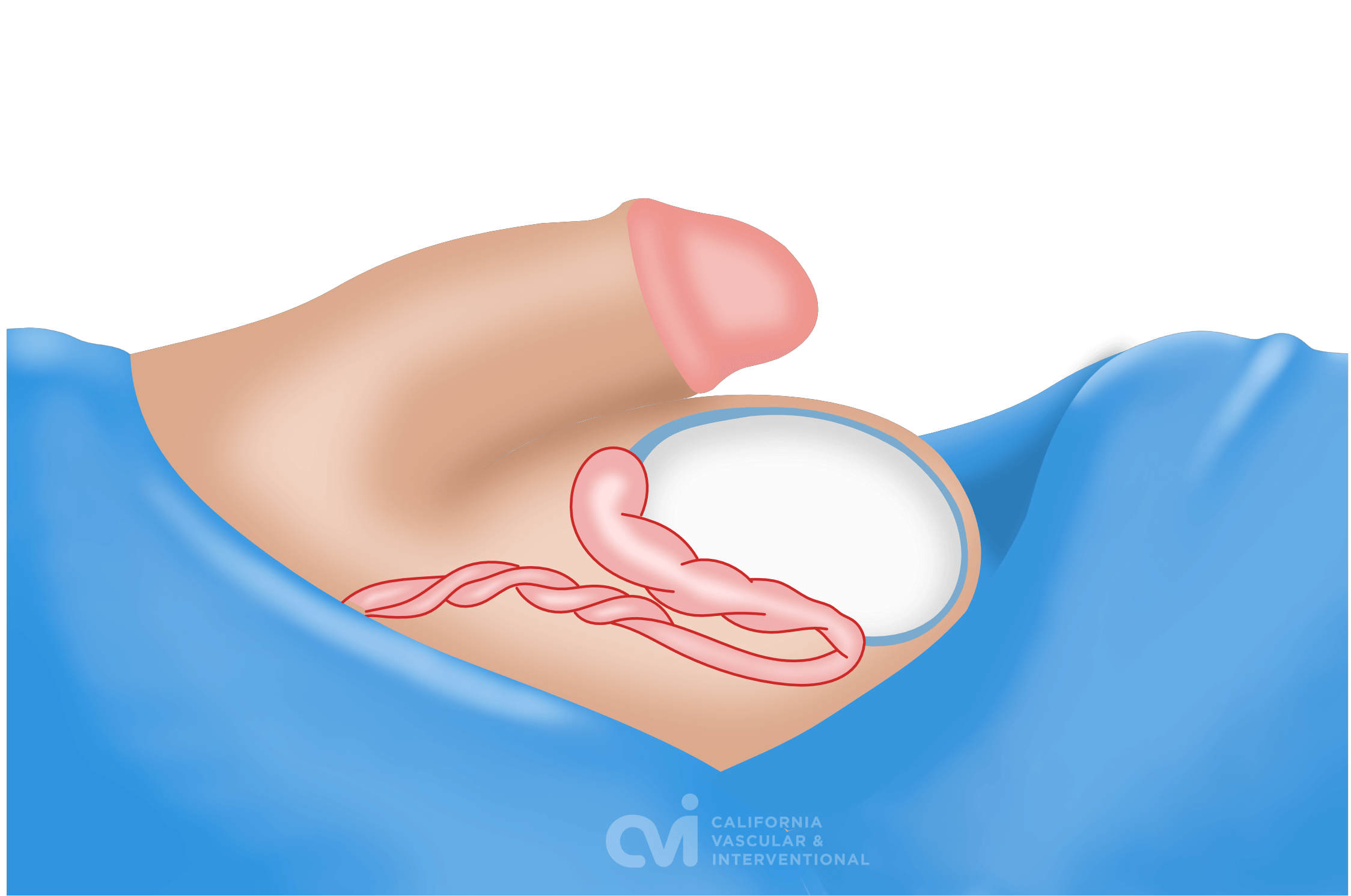
A spermatocele is a benign, fluid-filled cyst in the upper part of the epididymis — the coiled tube above the testicle that collects and transports sperm.
A smooth, soft sac of clear or milky fluid, sometimes containing sperm.
Incidental spermatoceles appear in 30% of men having a scrotal ultrasound for other reasons.
Spermatoceles do not typically affect fertility, and most are painless.
A spermatocele, also called a spermatic or epididymal cyst, is an abnormal sac in the upper part of the epididymis. The exact cause is unknown, but it is believed to result from a blockage in one or more of the many small tubes within the epididymis.
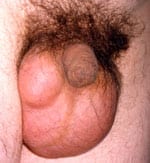
Why treat a spermatocele?
Spermatoceles are harmless, but one can grow large enough to cause discomfort, pain, or a feeling of heaviness — which is when treatment is usually considered.
Symptoms
- A smooth, soft lump above the testicle
- Discomfort or pain in the scrotum
- A sensation of heaviness or fullness
- Gradual growth over time
What it is not
- Not cancer — spermatoceles are benign
- Does not typically affect fertility
- Most are painless and need no treatment
- Easily confirmed with an in-office ultrasound
Am I a candidate for spermatocele sclerotherapy?
You may be a good candidate if you have an ultrasound-confirmed spermatocele that is causing discomfort, pain or heaviness — and you would prefer to avoid surgery.
Because the procedure is minimally invasive and performed under local anesthesia, it suits men who want a quick, in-office treatment with no incisions and no downtime. Dr. Allaei will review your ultrasound and symptoms to confirm whether sclerotherapy is appropriate for you. He sees patients throughout Los Angeles, Orange County and San Diego.
Watch a patient’s sclerotherapy experience
Hear from a patient who chose spermatocele sclerotherapy over surgery.
What are the treatment options for a spermatocele?
There are two treatments: aspiration and sclerotherapy, performed in the office, and surgical excision (spermatocelectomy).
Aspiration & sclerotherapy
- Fluid is drained through a small tube under ultrasound guidance
- A medication is injected to close the cavity
- Local anesthetic makes it essentially pain-free
- No incisions, stitches or downtime — walk out of the office
- No athletic support, ice or sutures afterward
Spermatocelectomy
- An incision is made in the scrotum and the sac dissected out
- The space is sutured closed
- Athletic support, ice packs and pain medication afterward
- Recovery can take up to 5 days
- Risks include pain, recurrence, hematoma, infection, and fertility effects if the epididymis or vas deferens is damaged
While we do not perform surgical removal, you should understand all your options. In one study, nearly 20% of patients who had surgical spermatocelectomy experienced postoperative complications such as treatment failure, chronic pain or scrotal abscess. Watch how spermatocele excision is performed (graphic video; not affiliated with CVI).
Spermatocele sclerotherapy vs. surgery
Compared with spermatocelectomy, sclerotherapy needs no incision, no stitches and no downtime, and avoids the roughly 20% postoperative complication rate seen with surgery.
| Factor | Spermatocele sclerotherapy | Surgical excision (spermatocelectomy) |
|---|---|---|
| Approach | Minimally invasive; ultrasound-guided aspiration and injection | Surgical incision and removal of the cyst |
| Anesthesia | Local anesthetic only | General or regional anesthesia |
| Setting | In-office, outpatient | Surgical facility |
| Incisions / stitches | None | Incision and sutures required |
| Recovery time | None — return to work immediately | Up to 5 days |
| Aftercare | No support garment, ice or bandaging | Athletic support, ice packs and pain medication |
| Complication rate | Low risk of complications | ~20% postoperative complications in one study |
| Risk to fertility | Minimal; structures protected under ultrasound | Possible if epididymis or vas deferens is damaged |
| Success rate | >75% after one treatment; ~95% with repeat | High, but with the complication risks above |
How is spermatocele sclerotherapy performed?
An in-office procedure under local anesthesia, guided by ultrasound from start to finish — you walk out of the office afterward.
Local anesthetic
Ultrasound-guided aspiration
Confirm it’s empty
Sclerotherapy & go
My urologist tried sclerotherapy and it didn’t work. Is this the same?
No. Most urologists don’t offer aspiration and sclerotherapy — and those who do usually perform it blindly with a needle, without ultrasound.
Why it often fails
- No way to see whether fluid is left behind
- Residual fluid dilutes the medication, rendering it inactive
- Needle aspiration is less effective at removing all the fluid
- Higher chance of puncturing nearby structures
Why it works
- Aspiration performed first under ultrasound guidance
- Ultrasound confirms all fluid is removed before injecting
- The tube’s exact position is visible throughout
- Testicle and adjacent structures are protected
Make sure the specialist performing your procedure is trained in ultrasound-guided procedures. Over the years, Dr. Allaei has refined his own technique based on what works — increasing success rates while reducing discomfort.
What are the results of spermatocele sclerotherapy?
More than 3 out of 4 patients are symptom-free after a single treatment — rising to nearly 95% with repeat treatment.
Another patient’s sclerotherapy story
Watch a second patient describe their experience with the treatment.

What is recovery like?
There is no downtime. You walk out of the office after the procedure and can return to work immediately — no athletic support, ice or bandaging needed.
How much does sclerotherapy cost?
Is sclerotherapy new?
No — sclerotherapy has been used on fluid collections and cysts for decades. Dr. Allaei has performed sclerotherapy on cysts in the liver, kidney and other organs for over 10 years, adapting the method for the scrotum so no catheter is left in place.
Request an Appointment
Dr. Allaei will review your ultrasound and symptoms and tell you whether sclerotherapy is right for you.
- Virtual video telehealth appointments available.
- All appointments conducted by our board-certified doctor — not assistants or non-physician providers.
Success depends on one thing: ultrasound precision
Spermatoceles are small, and the fluid must be completely drained before the medication is injected — or the treatment fails. That is exactly where Dr. Allaei’s expertise sets him apart.
Dr. Atabak Allaei, MD, is a double board-certified Vascular & Interventional Radiologist and one of the few specialists in the country to offer ultrasound-guided aspiration and sclerotherapy for spermatocele. Most practitioners are unaware the treatment exists — and among those who offer it, few perform it under continuous ultrasound guidance. He has performed more spermatocele sclerotherapy treatments than any other practitioner, which is why CVI is a leading referral practice for this procedure.
Continuous ultrasound guidance
Every step is performed under live ultrasound, confirming all fluid is removed and protecting the testicle.
A refined personal technique
10,000+ procedures, 800+ sclerotherapies
A decade of cyst sclerotherapy
Who performs your spermatocele sclerotherapy?
Spermatocele sclerotherapy is performed by an ultrasound-trained Vascular & Interventional Radiologist — not a surgeon. At California Vascular & Interventional, every procedure is performed personally by Dr. Atabak Allaei, who has completed more than 10,000 image-guided procedures, including over 800 sclerotherapies.
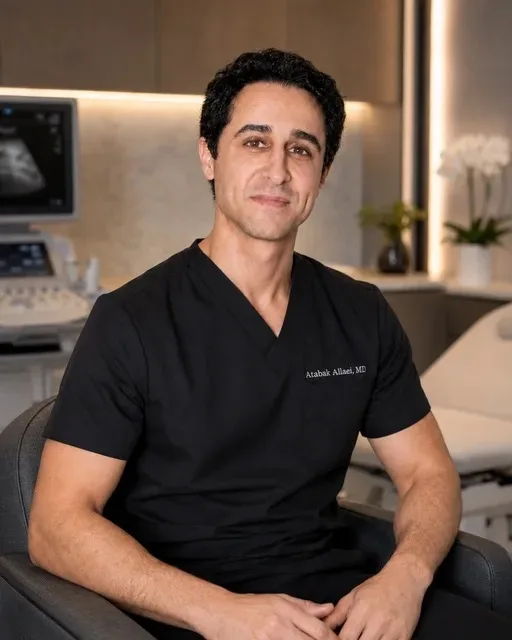
Atabak Allaei, MD
Double Board-Certified · Vascular & Interventional Radiology and Diagnostic Radiology
- Performs every procedure himself — not a physician assistant, nurse practitioner or rotating provider.
- Reads your imaging himself. Board certification in Diagnostic Radiology means he performs and interprets your ultrasound himself.
- Ultrasound-guided specialist with over a decade of sclerotherapy experience on cysts throughout the body.
Double Board-Certified
Mallinckrodt Fellowship
10,000+ Procedures
800+ Sclerotherapies
Physician-Performed
Why the specialty matters
Precise, image-guided drainage and sclerotherapy fall under the training of Vascular & Interventional Radiology. Urologists are trained in surgical treatment such as spermatocelectomy — and when they do attempt sclerotherapy, it is usually done blindly with a needle rather than under ultrasound.
Training and credentials
- University of California, San DiegoBS, Biochemistry and Cell Biology — Summa Cum Laude
- State University of New YorkDoctor of Medicine
- Residency — New YorkRadiology
- Mallinckrodt Institute of RadiologyFellowship in Vascular & Interventional Radiology — Washington University / Barnes-Jewish
- Cedars-Sinai Medical Center & UCI HealthAttending physician; Medical Director, California Vascular & Interventional
References
- Medscape: Spermatocele. Updated Jan 02, 2019. Author: Vernon M Pais, Jr, MD.
- Beiko DT, Morales A. Percutaneous aspiration and sclerotherapy for treatment of spermatoceles. J Urol. 2001 Jul;166(1):137-9. PMID: 11435841.
- Kiddoo DA, Wollin TA, Mador DR. A population based assessment of complications following outpatient hydrocelectomy and spermatocelectomy. J Urol. 2004 Feb;171(2 Pt 1):746-8. doi: 10.1097/01.ju.0000103636.61790.43. PMID: 14713801.
- Braslis KG, Moss DI. Long-term experience with sclerotherapy for treatment of epididymal cyst and hydrocele. Aust N Z J Surg. 1996 Apr;66(4):222-4. doi: 10.1111/j.1445-2197.1996.tb01169.x. PMID: 8611129.
Spermatocele sclerotherapy: common questions
What is a spermatocele?
A spermatocele (also called a spermatic cyst or epididymal cyst) is a benign, fluid-filled sac in the upper part of the epididymis, the coiled tube above the testicle that stores and transports sperm. It usually contains clear or milky fluid and is non-cancerous. Spermatoceles are common and are often found incidentally — in about 30% of men undergoing a scrotal ultrasound for other reasons.
Is a spermatocele dangerous, and does it affect fertility?
Spermatoceles are non-cancerous and do not typically affect fertility. Most are painless. However, a spermatocele can grow large enough to cause discomfort, pain, or a sensation of heaviness or fullness in the scrotum, which is when treatment is usually considered.
What is spermatocele sclerotherapy?
Spermatocele sclerotherapy is a minimally invasive, ultrasound-guided outpatient procedure that treats a spermatocele by draining the fluid (aspiration) through a small tube and then injecting a medication that closes the cavity so the fluid does not return. It is performed under local anesthesia with no incisions, stitches, or downtime.
Does spermatocele sclerotherapy hurt?
The procedure is performed using a local anesthetic that makes it essentially pain-free. There are no incisions or stitches, and most patients walk out of the office immediately afterward and return to work the same day.
What is the success rate of spermatocele sclerotherapy?
A single spermatocele aspiration and sclerotherapy procedure has a success rate of more than 75%, meaning about 3 out of 4 patients are symptom-free after one treatment. With repeat treatment, the success rate improves to nearly 95%.
How is sclerotherapy different from surgery?
Surgical excision (spermatocelectomy) requires an incision in the scrotum, sutures, an athletic support garment, ice, and pain medication, with recovery taking up to five days. Sclerotherapy involves no incision, no stitches, and no downtime. Surgery also carries a meaningful complication rate — in one study, nearly 20% of patients who underwent spermatocelectomy experienced postoperative complications such as treatment failure, chronic pain, or scrotal abscess.
Who performs spermatocele sclerotherapy?
Spermatocele sclerotherapy is performed by an interventional radiologist trained in ultrasound-guided procedures. At California Vascular & Interventional, Dr. Atabak Allaei, a double board-certified Vascular & Interventional Radiologist, performs every procedure personally.
My urologist tried sclerotherapy and it didn't work. Can I still have it?
How soon can I go back to work?
Can a spermatocele come back after sclerotherapy?
More than 75% of patients are symptom-free after a single treatment. If fluid returns, the procedure can be repeated, and with repeat treatment the success rate improves to nearly 95%.
Is spermatocele sclerotherapy covered by insurance?
No. California Vascular & Interventional does not accept insurance for sclerotherapy, so there is an out-of-pocket cost. Please contact the office for current charges.
How many procedures has Dr. Allaei performed?
Dr. Allaei has performed more than 10,000 image-guided procedures, including over 800 sclerotherapies, and has more than a decade of experience performing sclerotherapy on cysts throughout the body, including the liver and kidney.
Explore more image-guided treatments
Hydrocele Sclerotherapy
Non-surgical treatment for scrotal hydrocele.
Varicocele / Infertility
Embolization for scrotal varicocele.
Prostate Embolization (PAE)
Non-surgical treatment for an enlarged prostate.
Hemorrhoid Embolization (HAE)
Non-surgical treatment for internal hemorrhoids.
What is Interventional Radiology?
The specialty behind image-guided care.
Meet Dr. Allaei
The specialist who performs your procedure.
See if spermatocele sclerotherapy is right for you
If a spermatocele is causing you pain, heaviness or discomfort, sclerotherapy can treat it in the office — no incision, no stitches, and back to work the same day. Dr. Allaei will review your ultrasound and explain your options. Telehealth and in-person visits available across Los Angeles, Orange County and San Diego.
Set up an appointment
By submitting this form you consent to receive text messages from CVI at the number provided. Msg & data rates may apply. Reply STOP to unsubscribe.