Setup an appointment
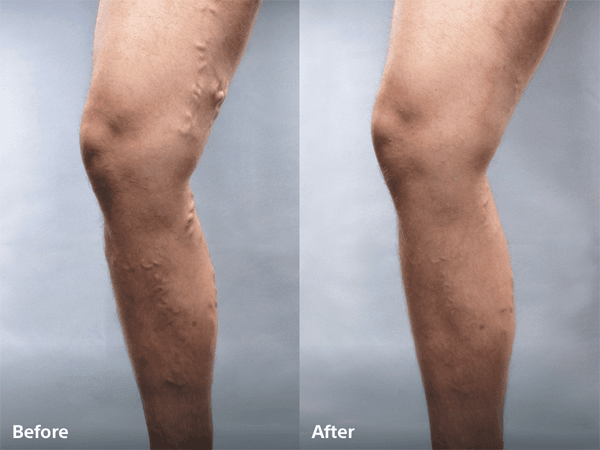
Close varicose veins — without surgery, laser, or heat.
Our practice treats varicose veins with non-thermal methods — Varithena, VenaSeal, and ClariVein — the least painful, safest, and most effective options. Virtually painless, under an hour, in-office, with no downtime. Performed by Dr. Atabak Allaei, one of the most experienced and trusted vein specialists in Los Angeles.
Vein treatment at a glance
Entire procedure, in the office
Image-guided procedures by our physician
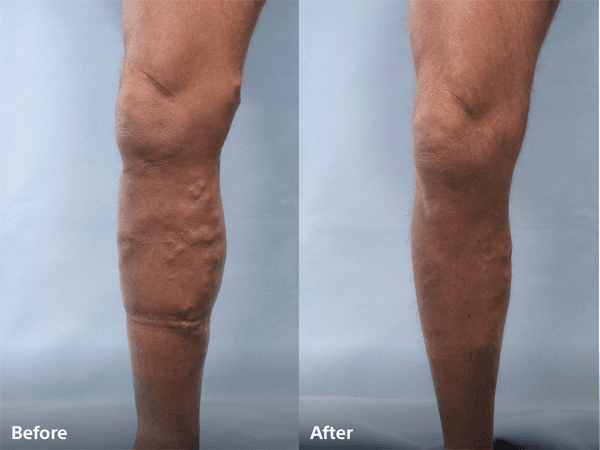
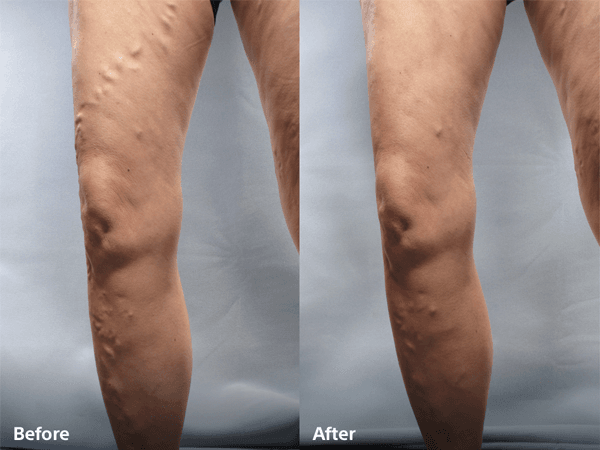
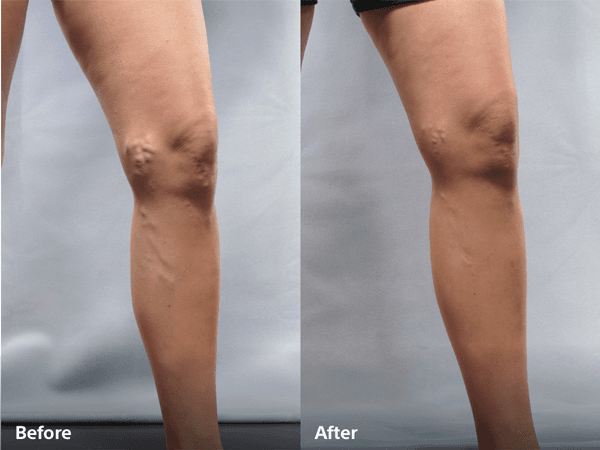
Varicose veins are more than a cosmetic issue — untreated, they can progress into chronic venous insufficiency (CVI) and even leg ulcers. They develop when leg-vein valves fail and blood flows backward (reflux) and pools. Dr. Allaei closes the diseased vein with non-thermal treatments — Varithena foam, VenaSeal adhesive, or ClariVein — through a tiny catheter under ultrasound guidance: virtually painless, under an hour, in-office, no downtime, no laser or heat, and often covered by insurance.
Find out in under a minute – no phone call needed.
Are varicose veins just a cosmetic issue?
No — left untreated, varicose veins can progress into chronic venous insufficiency (CVI). Nearly 25% of adults worldwide are affected.
Varicose veins are often misunderstood as simply a cosmetic issue, but when left untreated, they can progress into a more serious condition called chronic venous insufficiency (CVI). You are not alone — nearly 25% of the global adult population is affected.
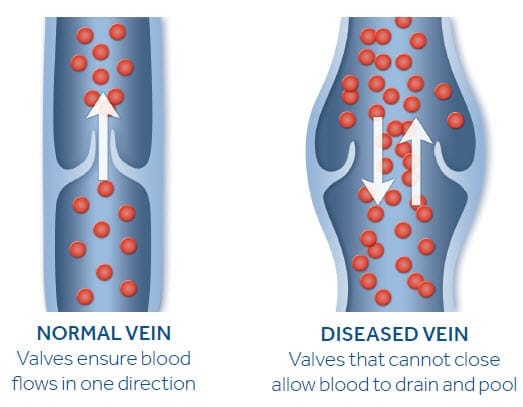
Healthy leg veins have valves that keep blood flowing to the heart. Vein disease develops when the valves stop working properly and allow blood to flow backward (i.e., reflux) and pool in the lower leg veins.
What are the signs, symptoms and risk factors?
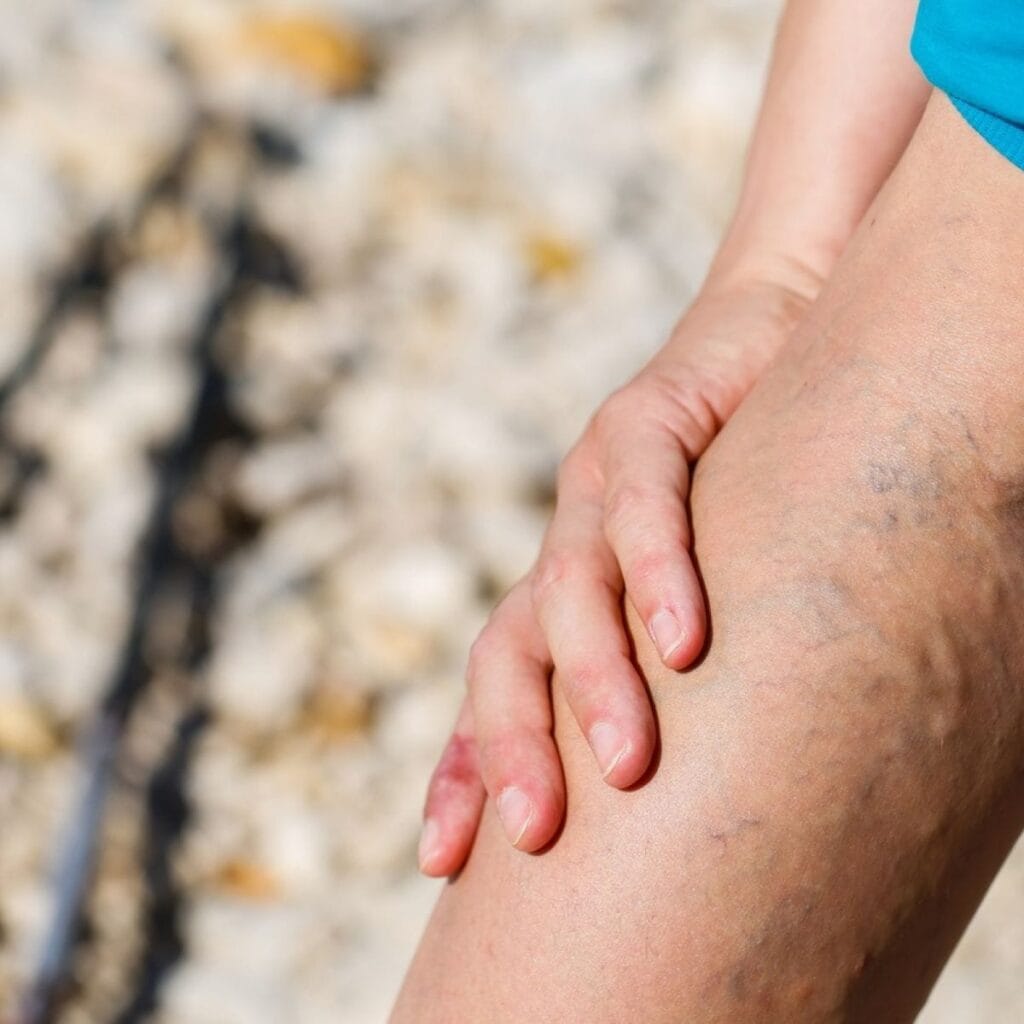
Symptoms range from aching, swelling, and heaviness to skin changes and open sores — and several risk factors make vein disease more likely.
Signs and symptoms
- Varicose veins
- Aching or pain
- Swelling
- Cramping
- Heaviness or tiredness
- Itching
- Restlessness
- Skin changes
- Brown, colored skin
- Open sores or ulcers
Risk factors
- Family history
- Lack of exercise
- Leg injury or trauma
- Prolonged sitting or standing
- Obesity or excess weight
- Current or previous pregnancies
- Smoking
How are varicose veins treated?
The goal of treatment is to reduce or stop the backward flow of blood — with compression stockings, removing the diseased vein, or closing it.
The goal of treatment for vein disease is to reduce or stop the backward flow of blood. The following may be prescribed to treat your varicose veins. Our doctor can help you decide which treatment is best for you:
- Compression stockings
- Removing diseased vein
- Closing diseased vein (through thermal or non-thermal treatment)
With proper treatment, the progressive symptoms of vein disease are preventable.
Without treatment, signs and symptoms may progress and significantly impact quality of life, and lead to venous leg ulcers.
Which varicose vein treatment is best?
Our practice primarily uses non-thermal (without heat) methods — the least painful, safest, and most effective way to close abnormal veins.
While there are many options to closing the abnormal veins, our practice uses primarily non-thermal (without heat) methods as they are the least painful, safest and most effective methods. See below how each one is performed.
Varithena · VenaSeal · ClariVein
- Treatment under 1 hour
- Virtually painless
- Non-surgical · outpatient in-office procedure
- No downtime — return to normal activity
- No laser or heat required
- No nerve damage risk
- No skin ulcer risk
Laser — EVLT / EVLA
- Uses laser heat inside the vein
- Very effective, but…
- Associated with increased risk vs non-thermal
- Associated with more pain vs non-thermal
- Carries nerve damage risk
- Carries skin ulcer risk
Thermal methods include Endovenous Laser Therapy (EVLT) or Ablation (EVLA). While these methods are very effective, they are associated with increased risk and pain than the non-thermal methods. As an advanced vein practice we are continuously moving our practice towards innovative solutions that receive the highest patient satisfaction and results, without the risks.

How is non-thermal vein treatment performed?
All three treatments follow the same gentle path: ultrasound mapping, numbing, catheter-based closure — then compression and same-day activity.
Ultrasound vein mapping
Numbing
A topical and local numbing medication is applied, making the treatment essentially painless.
Close the diseased vein
Through a tiny catheter under ultrasound guidance — with foam (Varithena), adhesive (VenaSeal), or the rotating-wire ClariVein — blood flow shifts to healthier veins.
Compression & same-day activity
Bandages and compression stockings are applied. The whole procedure takes under an hour, and most people are back to many activities the same day.
Varithena, VenaSeal & ClariVein compared
Three proven ways to close the diseased vein — foam, medical adhesive, or a rotating-wire catheter — and our doctor helps you decide which is best for your veins.
| Factor | Varithena® | VenaSeal™ | ClariVein® |
|---|---|---|---|
| What it is | Injectable polidocanol foam (prescription) | Cyanoacrylate medical adhesive ("superglue") | Infusion catheter with rotating wire tip |
| How it closes the vein | Foam fills & treats the vein section; vein collapses, foam deactivates | Sterile adhesive seals the malfunctioning vein shut | 360° rotating wire disperses medication into the vein wall |
| Delivery | Tiny catheter, ultrasound-guided | Tiny catheter, ultrasound-guided | Tiny catheter, ultrasound-guided |
| Anesthesia | Topical + local numbing | Topical + local numbing | Topical + local numbing |
| Time | Usually under 1 hour | Usually under 1 hour | Usually under 1 hour |
| After | Bandages + compression stockings; same-day activity | Bandages + compression stockings; same-day activity | Bandages + compression stockings; same-day activity |
Varithena®
Varithena® is the brand name of an injectable polidocanol foam medication. This is a prescription foam that fills and treats the desired section of the vein. The diseased vein collapses and the foam is deactivated. When the malfunctioning vein collapses, blood flow shifts to healthier veins nearby.
- Our Board Certified Radiologist will perform an ultrasound of your veins
- A topical and local numbing medication is applied making the treatment essentially painless
- Following administration, the doctor applies bandages and compression stockings to the leg
- The foam is then administered through a tiny catheter directly into the malfunctioning vein under ultrasound guidance, causing the vein to close down
- It usually takes the doctor less than an hour to administer
Gentle
The gentle, noninvasive treatment requires just one or two sticks for a treatment.
Minimal downtime
Most often, people can go back to doing many activities the very same day as treatment.
Fast procedures
The entire procedure usually takes less than an hour.
Short treatment process
Insurance coverage
Insurance carriers may cover treatment, depending on severity of veins and symptoms.
VenaSeal™
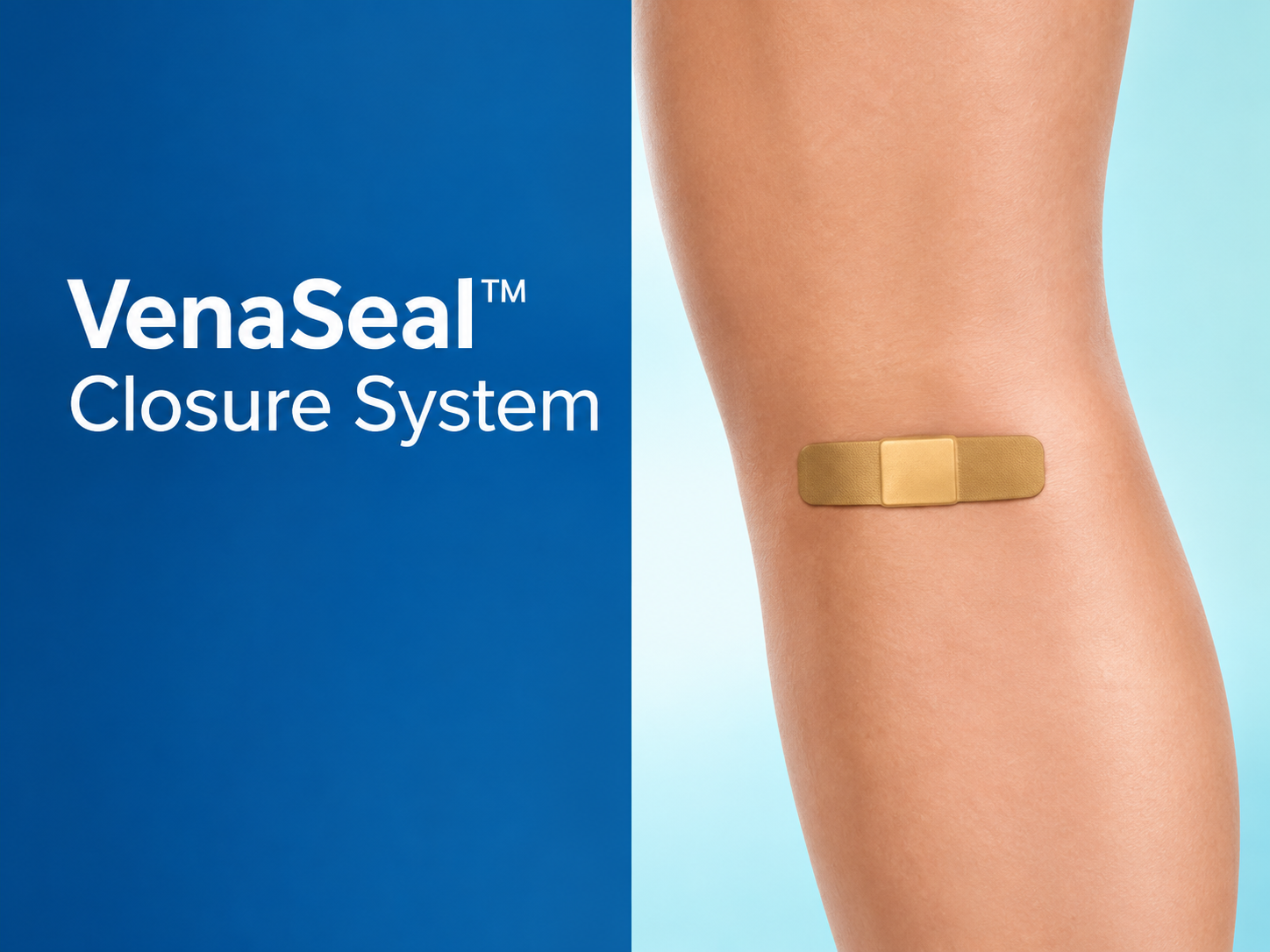
Venaseal is made of a substance referred to as cyanoacrylate — a clear, free-flowing superglue. The superglue is sterile and safe for insertion into the abnormal vein. Cyanoacrylate has been used for years within the medical community as a strong adhesive and is a trusted substance that does no harm to the body.
- Our Board Certified Radiologist will perform an ultrasound of your veins
- A topical and local numbing medication is applied making the treatment essentially painless
- The glue is then administered through a tiny catheter directly into the malfunctioning vein under ultrasound guidance, causing the vein to close down
- It usually takes the doctor less than an hour to administer
- Following administration, the doctor applies bandages and compression stockings to the leg
ClariVein®
ClariVein®IC is an innovative infusion catheter with a rotating wire tip that disperses medication into the wall of the abnormal vein causing it to collapse.
- Our Board Certified Radiologist will perform an ultrasound of your veins
- A topical and local numbing medication is applied making the treatment essentially painless
- A tiny catheter is placed into the malfunctioning vein
- The rotating wire catheter of the ClariVein is then inserted into the vein
- Once the tip is in place, the wire will start rotating in a 360-degree spinning motion
- A medication is administered through the tip of the rotating wire into the walls of the vein causing it to close down
A painless result relies on imaging expertise
You have many options for treatments and providers — and ultrasound-guided vein closure relies heavily on board-certified imaging expertise for a successful, painless result.
You have many options for not only treatments but also healthcare providers. There are image-guided specialists, such as our physician, and other physicians or assistants that just dabble in these image-guided procedures.
A specialist, not someone who dabbles
Board-certified in imaging
Ultrasound guidance is the backbone of painless vein closure — and our physician is board-certified in the imaging these procedures rely on, not someone who dabbles.
5,000+ image-guided procedures
An advanced, non-thermal practice
Patient experience before business
Request an Appointment
Please note that although we strive to protect and secure our online communications, and use the security measures detailed in our Privacy Policy to protect your information, no data transmitted over the Internet can be guaranteed to be completely secure and no security measures are perfect or impenetrable. If you would like to transmit sensitive information to us, please contact us, without including the sensitive information, to arrange a more secure means of communication. By submitting this form you consent to receive text messages from CVI at the number provided. Msg & data rates may apply. Msg frequency varies. Unsubscribe at any time by replying STOP.
Who performs your vein treatment?
At California Vascular & Interventional, your vein treatment is performed by Dr. Atabak Allaei — by the physician, with the ultrasound skill that painless, successful vein closure relies on. He is one of the most experienced and trusted vein specialists in Los Angeles.
Atabak Allaei, MD
Dual board-certified in Vascular & Interventional Radiology and Diagnostic Imaging — the imaging expertise that ultrasound-guided vein treatment is heavily reliant on — with more than 5,000 image-guided procedures across the vascular system. All treatments are physician-performed at our offices in Los Angeles, Orange County, and San Diego.
Varicose vein treatment: common questions
Are varicose veins just a cosmetic issue?
No. Varicose veins are often misunderstood as simply a cosmetic issue, but when left untreated they can progress into a more serious condition called chronic venous insufficiency (CVI). Nearly 25% of the global adult population is affected. Vein disease develops when the valves in the leg veins stop working properly and allow blood to flow backward (reflux) and pool in the lower leg veins.
What are the signs and symptoms of varicose veins?
Signs and symptoms include visible varicose veins, aching or pain, swelling, cramping, heaviness or tiredness, itching, restlessness, skin changes, brown-colored skin, and open sores or ulcers. Without treatment, signs and symptoms may progress, significantly impact quality of life, and lead to venous leg ulcers.
How are varicose veins treated?
The goal of treatment is to reduce or stop the backward flow of blood. Options include compression stockings, removing the diseased vein, or closing the diseased vein through thermal or non-thermal treatment. With proper treatment, the progressive symptoms of vein disease are preventable. Our practice primarily uses non-thermal methods — Varithena, VenaSeal, and ClariVein — as they are the least painful, safest, and most effective.
Which varicose vein treatment is best?
While there are many options for closing abnormal veins, non-thermal (without heat) methods are the least painful, safest, and most effective. All three non-thermal options — Varithena foam, VenaSeal adhesive, and ClariVein — take under an hour, are virtually painless, non-surgical, done in the office with no downtime, and carry no laser or heat, no nerve damage risk, and no skin ulcer risk. Our doctor helps you decide which treatment is best for your specific veins.
What is Varithena and how does it work?
Varithena is the brand name of an injectable polidocanol foam medication. The prescription foam fills and treats the desired section of the vein; the diseased vein collapses and the foam is deactivated. When the malfunctioning vein collapses, blood flow shifts to healthier veins nearby. The gentle treatment requires just one or two sticks, takes less than an hour, and most people only need one treatment — in pivotal trials, only 3.4% of patients needed to re-treat an area.
Is non-thermal treatment better than laser (EVLT/EVLA)?
Thermal methods such as Endovenous Laser Therapy (EVLT) or Ablation (EVLA) are very effective, but they are associated with increased risk and pain compared with non-thermal methods. Non-thermal treatments carry no laser or heat, no nerve damage risk, and no skin ulcer risk — which is why our practice primarily uses Varithena, VenaSeal, and ClariVein.
Is varicose vein treatment covered by insurance?
Insurance carriers may cover treatment. Coverage may depend on the severity of the varicose veins and symptoms. Our office can help you understand your coverage during your consultation.
What happens if varicose veins are left untreated?
Without treatment, signs and symptoms may progress and significantly impact quality of life, and can lead to venous leg ulcers. Untreated vein disease can advance into chronic venous insufficiency (CVI). With proper treatment, the progressive symptoms of vein disease are preventable.
Explore related treatments
Spider Veins
All Leg Pain Treatments
Peripheral Arterial Disease
Pelvic Congestion Syndrome
What is Interventional Radiology?
Meet Our Specialist
Don't let vein disease progress
With proper treatment, the progressive symptoms of vein disease are preventable. Request a consultation and Dr. Allaei will map your veins with ultrasound and help you decide which treatment — Varithena, VenaSeal, or ClariVein — is best for you. Insurance may cover treatment. Offices in Los Angeles, Orange County and San Diego.